
Barcelona's Busiest Places: When to Go and What to Do Instead
20. oktober 2022
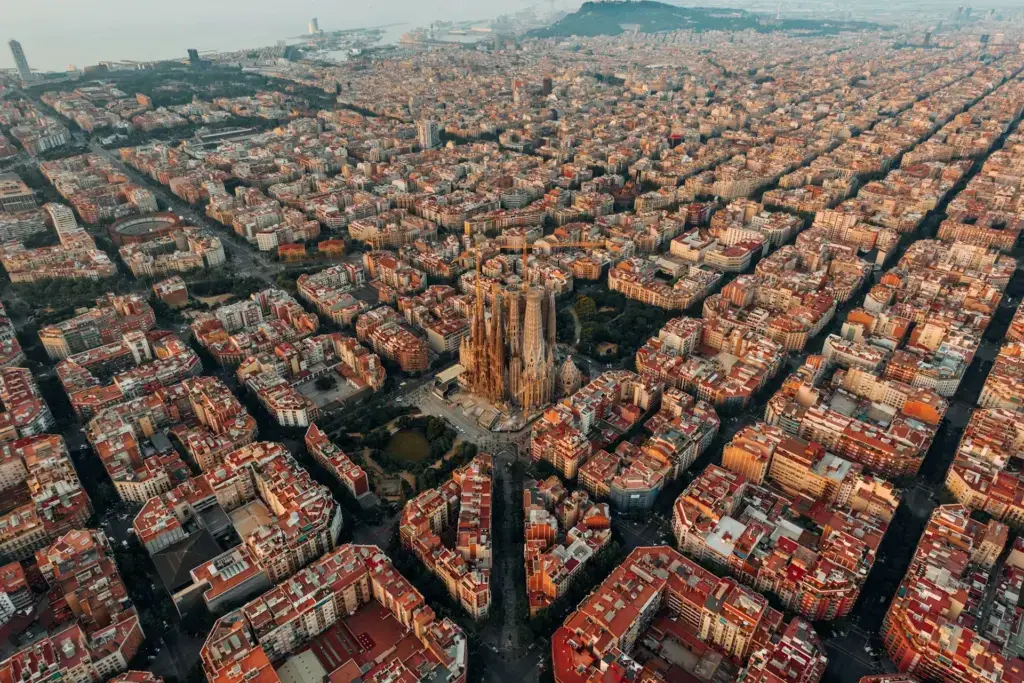
Barcelona has a crowding problem, and you can work around it
Barcelona is one of the most visited cities in Europe and it is not comfortable about it. There have been repeated protests by residents, the city has moved to end tourist-apartment licences by 2028, and in the busiest streets the balance between a place where people live and a place people visit has clearly tipped.
That is not a reason to stay away. It is a reason to go at the right hours, book what needs booking, and know where the equally good, far emptier alternatives are. Here are the five busiest places, honestly handled.
La Sagrada Família
Gaudí's basilica has been under construction since 1882 and is still not finished, which is the most interesting thing about it: you are looking at a medieval-scale building project happening now. The interior is the reason to go in. The columns branch like trees and the stained glass throws colour across the whole nave, warm on one side and cold on the other.
Book weeks ahead for a timed slot; walk-up tickets are usually gone. Tower access is a separate add-on and involves a lift up and a narrow spiral stair down.
Go for the first slot of the morning or the last of the day. Mid-morning is when every coach in the city arrives.
Park Güell
The mosaic terrace, the lizard and the gatehouses are in the Monumental Zone, which has been ticketed with timed entry since 2013 precisely because it was being overwhelmed. Book ahead.
What most people miss: the rest of Park Güell, the bigger part, is a free public park with pine woods, paths and views over the city. If the ticketed zone is sold out, walk the free part instead; it is genuinely lovely and almost nobody does it.
La Barceloneta
Worth knowing: the city beach is not natural. The seafront was industrial until Barcelona rebuilt it for the 1992 Olympics, and the sand was brought in. It changed the city entirely, and it is the reason Barcelona is a beach destination at all.
Barceloneta is also a dense residential neighbourhood, and the friction between residents and visitors is real, particularly at night. Use the beach, eat in the neighbourhood, and keep the noise down after dark. If you want space, walk twenty minutes north-east to the beaches beyond the Port Olímpic, which are wider and calmer.
The Palau de la Música Catalana
The Palau is a concert hall by Domènech i Montaner, a UNESCO World Heritage site, and the most spectacular interior in the city: an inverted stained-glass dome pouring light into the auditorium, mosaic columns, sculpture bursting off the walls.
Here is the tip that changes the visit. Most people take the guided tour. Instead, go to a concert. Tickets to a lunchtime or evening performance often cost about the same as the tour, you sit in the room with the light coming through the dome, and you hear what the hall was built for.
La Rambla
Straight talk: La Rambla is worth walking once, end to end, and is not worth eating on. The restaurants along it are expensive and mediocre, and it is the city's main pickpocketing ground. Keep bags closed and in front of you.
The Boqueria market halfway along is a genuine market that has been overrun; large tour groups are restricted at busy times. Go early, before nine, when it is still supplying restaurants, or go to the Sant Antoni market instead, which is beautifully restored, full of locals and ten minutes away.
Where to go instead
Three swaps that cost you nothing in quality.
Instead of queuing all day for Gaudí, add the Hospital de Sant Pau, another Domènech i Montaner masterpiece and a UNESCO site: a whole complex of pavilions, gardens and tilework a few minutes from the Sagrada Família, with a fraction of the crowd.
Instead of the Gothic Quarter at midday, walk Gràcia in the evening, where the squares fill up with people who live there.
And instead of a rooftop bar, climb Montjuïc or the hills behind the city for the view. If you go up to the old bunkers above Carmel, note that residents have asked for quiet and access is restricted at night; that request is reasonable and worth respecting.
Seeing Barcelona by playing it
The pleasure of this city is in the grid of the Eixample, the courtyards of the old town and the neighbourhood squares, not in the queues. A city game gives you a route with clues through those streets, which puts you where the crowds are not. It works well with friends and with a work group.
Frequently asked questions
Do I need to book the Sagrada Família?
Yes, weeks ahead for a timed slot. Tower access is booked separately.
Is Park Güell free?
Partly. The Monumental Zone with the mosaics needs a timed ticket; the larger surrounding park is free.
When is Barcelona least crowded?
November to March, apart from the Christmas period. In summer, early mornings are the only quiet hours.
Is La Rambla safe?
It is safe but it is the main area for pickpockets. Keep bags zipped and in front of you, and do not put a phone on a café table.
What is a good alternative to the Boqueria?
The Sant Antoni market: restored, busy with locals, and ten minutes from the centre.
Come and play in Barcelona
If you want the city rather than the queue, walk it with a playing route. Here is how it works, and for team outings and larger groups we have formats on this page. Questions about dates, group sizes or routes? Get in touch. More on playing here: quests in Barcelona.