
City Game The Hague: A City Built for Looking Closely
2022年10月14日
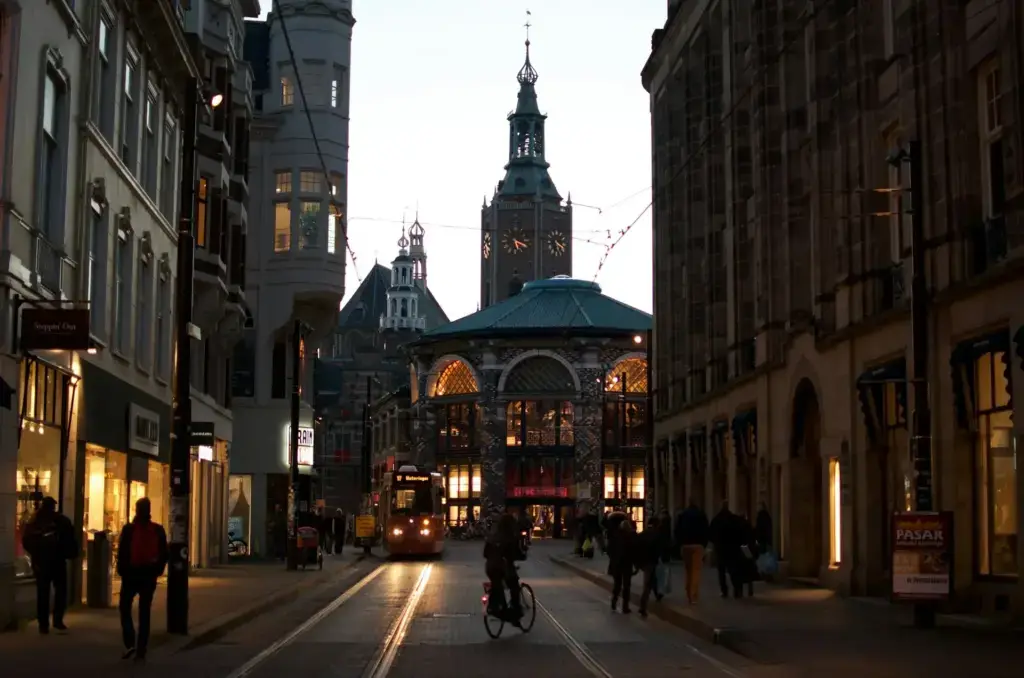
The Hague is the least obvious of the big Dutch cities and the most rewarding to a route. Amsterdam announces itself; Utrecht is charming on sight; The Hague looks like a fairly ordinary city until someone tells you that the pond you are standing next to has had a government building on its edge for eight hundred years.
That gap between what you see and what is actually there is exactly what a good outdoor game exploits. Here is what a route through the centre passes, and how to build a day around it.
The centre, in walking order
Hofvijver and the Binnenhof. The pond and the courtyard beside it are the historical heart of the country – the Ridderzaal, the Hall of Knights, has stood there since the thirteenth century. The complex has been under a long renovation, with parliament working from elsewhere in the meantime, so check the current situation before planning to get inside. From the outside it is unaffected, and the view across the Hofvijver is the picture everyone takes.
Mauritshuis. A small seventeenth-century house holding an outsized collection – Vermeer's Girl with a Pearl Earring and Rembrandt's Anatomy Lesson among them. Small enough to see properly in an hour, which is rarer than it sounds.
Gevangenpoort. The medieval prison gate a minute away, a reminder that the same square handled government and punishment without much distance between them.
Noordeinde and the palace. Noordeinde Palace is the king's working palace, so again: an exterior. The street it sits on is one of the better ones in the city, full of small shops and quiet enough to hear yourself.
The Passage. The covered nineteenth-century shopping arcade between Spuistraat and Buitenhof – a genuine architectural set piece, and a useful place for a route to duck into when it rains.
Grote Kerk and the Grote Markt. The old church tower is the landmark that orients you from several streets away; the square nearby is where the evening happens.
Two things worth the detour
The Peace Palace, north-west of the centre, houses the International Court of Justice. You mostly see it through the gates, which is still worth the walk: it is a strange and grand building, and the reason The Hague is called the international city of peace and justice.
Panorama Mesdag is a nineteenth-century circular painting of Scheveningen you stand inside. It takes twenty minutes and stays with people longer than most museums twice its size.
Why this centre suits a puzzle route
An outdoor game needs answers that are physically present: a date over a doorway, a coat of arms, the number of figures on a gate. The Hague has centuries of institutional building layered onto ordinary streets, which produces an unusual amount of that kind of detail – and, unlike Amsterdam, it produces it without crowds in the way.
The centre is also compact and flat, with short distances between landmarks and cafés at regular intervals. The mechanics of a route are on the how it works page.
Scheveningen, and when to add it
The beach is fifteen minutes from the centre by tram, which makes The Hague the only Dutch city where you can finish a route and be at the sea before the group disperses. In summer that is a genuinely good ending. In February it is a windswept promenade, and the centre is the better bet.
A shape for the day
Start at the station side and walk in past the Hofvijver. Two hours through the centre. Finish either at the Grote Markt with a table booked, or on the tram to Scheveningen if the weather has cooperated. Three hours door to door.
For a larger group, split into teams of four to six all playing the same route and compare scores at the end. Our groups and companies page covers larger bookings, and there is more on picking a format by group size in our piece on group activities.
Frequently asked questions
What is The Hague known for?
Being the seat of the Dutch government and the home of international courts including the International Court of Justice at the Peace Palace – and, less formally, for being the only major Dutch city with a beach attached.
Can you visit the Binnenhof?
The complex has been undergoing a long renovation with parliament housed elsewhere, so public access has been limited. Check the current situation before planning around going inside; the exterior and the Hofvijver are open as always.
Is The Hague walkable?
Very. The centre is flat and compact, and everything above sits within about twenty-five minutes' walk end to end. Scheveningen is a short tram ride rather than a walk.
How does it compare to Amsterdam for a day out?
Fewer crowds, more government and art, less canal postcard. For a group that has already done Amsterdam, The Hague usually lands better.
What is there to do in bad weather?
The Mauritshuis, Panorama Mesdag, the Escher museum and the covered Passage are all indoors and close together. An outdoor route also copes well here, because the centre has shelter at short intervals.
Is it good with children?
Yes, and better than its reputation: the Mauritshuis is small enough to hold attention, the beach is fifteen minutes away, and a puzzle route through the centre works from about eight years old with an adult in the team.
Playing in The Hague
See what is currently running on our locations page, or tell us about your group through the contact page.