
A murder mystery city walk sounds like one thing and is actually three. An evening with actors playing suspects. A self-guided fictional case you solve from a phone as you walk. Or a guided walk about a real, historical crime.
They cost different amounts, suit different groups, and the third one raises a question the other two don't.
The three types
Actor-led mystery
Performers in character, a scripted case, usually an evening with a fixed start time and a set price per person. The strongest atmosphere by far, because a good actor does something no app can.
The trade-off is rigidity: you go at the group's pace, you can't arrive late, and for anyone who dislikes being drawn into a performance it can be uncomfortable. Worth asking in advance how much audience participation is expected.
Self-guided fictional case
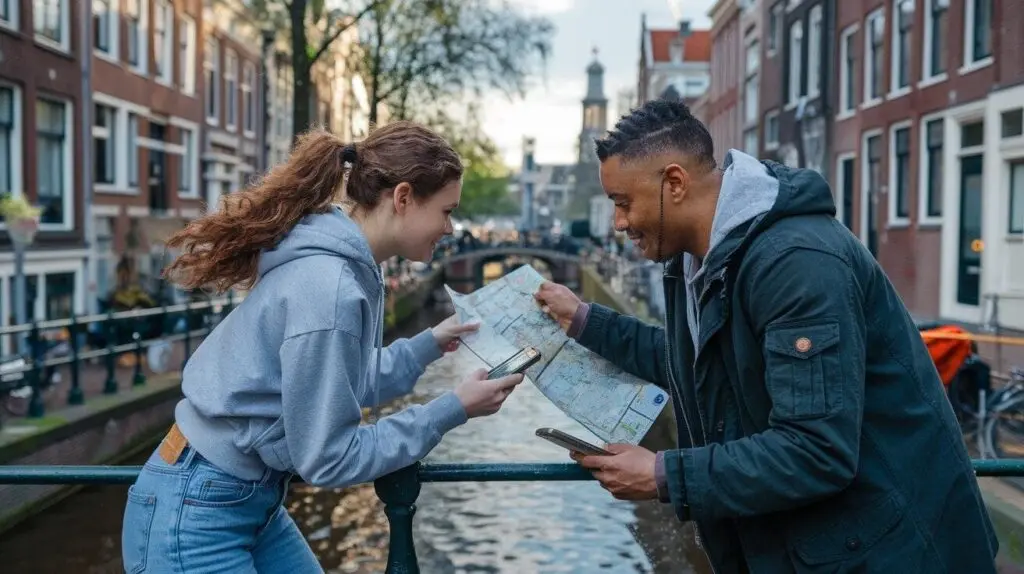
An invented murder with clues attached to real streets, played from a phone by a team of four to six. No fixed start, no actors, and you set the pace. Weaker atmosphere, much more flexible, and far better for a group who want to talk to each other rather than watch a performance.
This is the format that works for a work outing or a birthday, because several teams can play the same case at once.
A walk about a real crime
A guide takes you to the actual locations of a historical murder and tells you what happened. This is a different purchase entirely - closer to social history than to a game - and the good ones are genuinely interesting about policing, poverty and how cities worked.
The question the third type raises
Walks built on real murders have drawn sustained criticism, and it's worth understanding why before you book one. The objection isn't to discussing crime; it's that many of these walks centre the killer and treat the victims as scenery - often women, often poor, often named only in passing.
Some operators handle this seriously. They name the victims, say who they were, and put the murders in the context of the conditions that made them possible. Others sell a spooky evening with a hooded figure and a discount for groups.
You can tell which one you're booking from the description. If it's written around the murderer's nickname and promises to make you jump, it isn't history. If it names the people who died, it probably is. Neither is a criticism of wanting to walk through a city at night hearing dark stories - it's just worth knowing what you're paying for.
What to check before booking
How much participation is expected? Actor-led events vary from watching to being questioned in front of the group. Ask, because someone in your group will care.
Is there a fixed start time? Actor-led always; self-guided usually not. For a group arriving separately, that difference decides it.
How dark is it, and how late? Evening walks in winter are properly dark, which is atmospheric but changes what's suitable for children and for anyone uneasy walking at night.
Age suitability. Fictional mysteries suit children from about ten. Real-crime walks generally don't, whatever the age policy says.
How much walking? Two to four kilometres is normal, often on cobbles, often after dark. Check for anyone in the group who'd struggle.
Group size. Actor-led events cap out; self-guided formats split into teams and scale.
Which suits which group
A couple on a weekend away: either, though actor-led makes a better evening out and self-guided a better afternoon.
A work group: self-guided in teams. Actor-led events with colleagues put people on the spot in front of their manager.
A birthday or hen or stag group: self-guided, because it scales and nobody has to perform.
Someone interested in the city's history: a real-crime walk with a guide who takes it seriously - but read the description carefully first.
Families with children: fictional, daylight, self-guided.
Where to look
Story-driven routes exist in city centres across Europe, played in teams from a phone with no fixed start. You can see which cities have routes and pick one nearby, and the page on how the game works explains the format in a couple of minutes.
For several teams playing the same case at once, there's a setup for companies and groups.
Frequently asked questions
How long does a murder mystery walk take?
Two to three hours. Actor-led evenings often run longer once dinner or drinks are included.
Do you have to act?
In self-guided formats, no. In actor-led events it varies from none to a lot - ask before booking.
Is it suitable for children?
Fictional mysteries from about ten. Walks about real murders generally aren't, regardless of the stated minimum age.
Is it scary?
Fictional cases rarely. Real-crime walks after dark can be, and that's usually the intention.
Can you do it in a large group?
Self-guided yes, split into teams. Actor-led events usually have a maximum.
What happens if it rains?
Actor-led evenings usually run regardless. Self-guided routes have no fixed slot, so you simply move them.
In short
Decide first whether you want a performance, a puzzle or a history walk - they're three different evenings. If it's the third, read the description and check whether the victims are named. For the history-without-the-crime version, we've written about historical city walks.
Not sure which format suits your group? Ask through the contact page.
Detective Murder Mystery Game
Find the killer with clues all over town. See the games ›