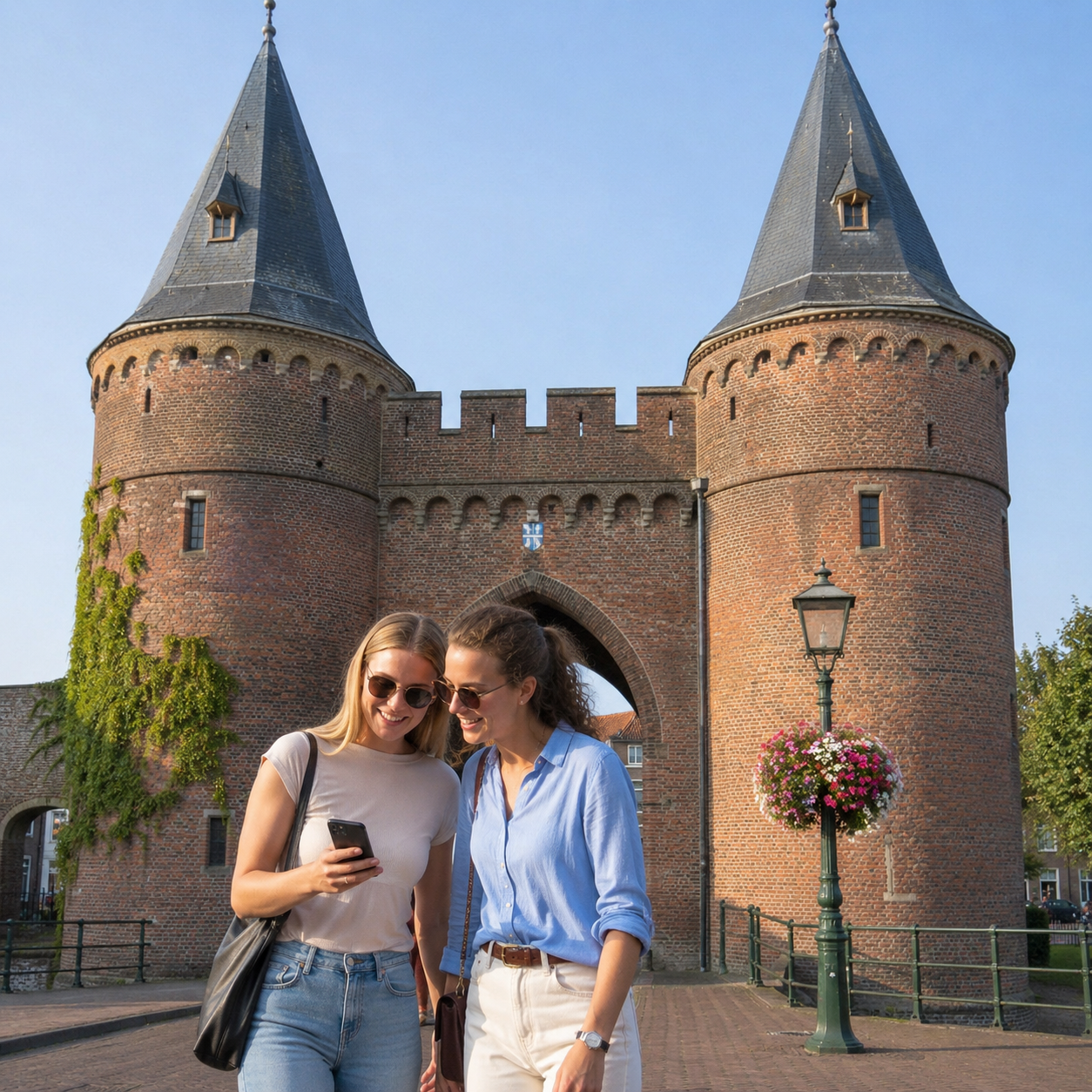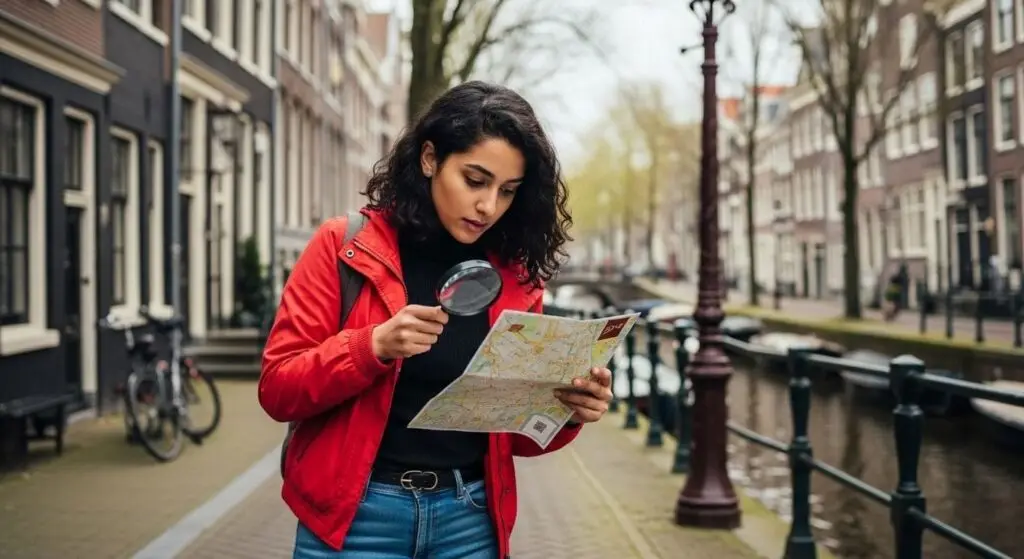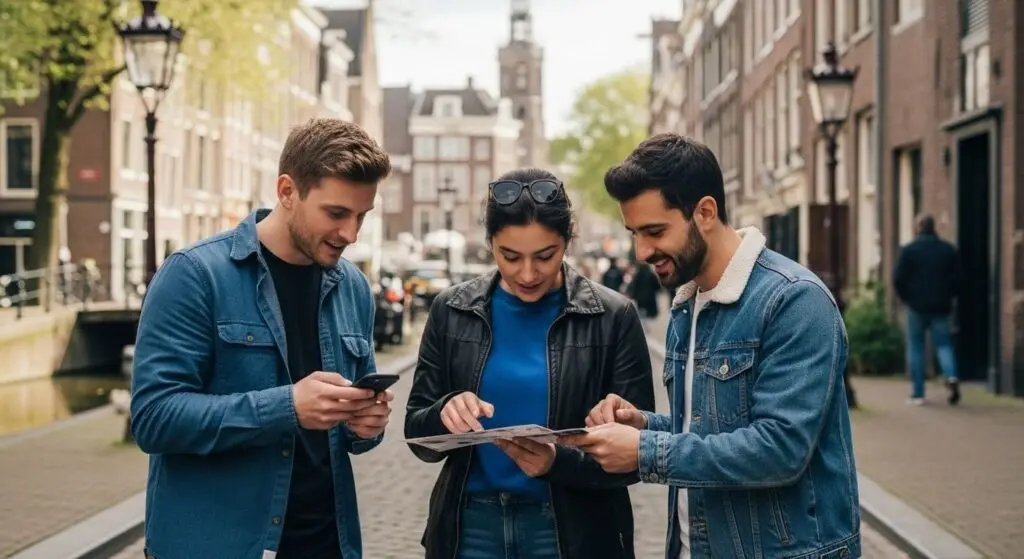
A puzzle game played outdoors turns a city into the board: your team walks a route, and every stop asks you to work something out before you can continue. It keeps the satisfaction of a good puzzle and adds daylight, distance and a place to sit down afterwards.
This article covers the types of puzzles you meet on a city route, how to pick one for your group and what makes a team good at them. The how to play page explains the practical side.
What kinds of puzzles appear on a city route?
- Observation: the answer is in front of you, on a facade, a plaque or a statue, if you look closely enough.
- Logic: a set of statements that narrows down to one answer.
- Word puzzles: anagrams, hidden words, street names read differently.
- Counting and measuring: windows, steps, arches, columns.
- Photo and action tasks: the light relief that makes the group laugh.
Good routes alternate between these, so that no single kind of thinker carries the whole team.
Why outdoor puzzles work better in a group
Around a table, the fastest solver tends to take over. On a route, the group spreads out: one person reads the clue, another walks to the corner to check something, a third notices the detail everyone else has walked past. The puzzle gets solved by conversation rather than by one person thinking hardest.
Team size
Two to six players per team. Below two, there is no discussion; above six, someone is always spectating. For bigger groups, split into several teams and run the same route in parallel.
Which puzzle route suits your group?
For a case with pressure
The Syndicate city escape game is the closest to an escape room: a story with an antagonist and puzzles that build on each other.
For a mystery to unravel
The Sherlock Holmes murder mystery game leans on deduction: witnesses, evidence and a suspect list rather than a countdown.
For exploring while you solve
The Secrets of exploration game keeps the puzzles approachable and puts the city itself in the foreground.
How to play
- Choose a city and a concept, then set your date and starting time.
- Meet at the starting point with one charged phone per team.
- Solve the puzzle at each stop to unlock the next location.
- Take a hint when a puzzle resists; the route always continues.
- Finish at the end point and compare scores.
Playing time, distance and languages differ per city and concept. All destinations are listed under the cities where you can play a City Game.
How to get better at them
- Read the clue out loud. Half of all wrong answers come from skimming.
- Look up: most datable detail on a street sits above shopfront level.
- Write down what you have already tried, so the team does not loop.
- Swap the phone around, so everyone gets a turn at leading.
- Use a hint before frustration sets in. The point is the day, not the score.
Frequently asked questions
What is a puzzle game in a city?
It is an outdoor game in which teams solve puzzles tied to real locations along a walking route, using a phone for the clues and hints.
Do you need to be good at puzzles?
No. The routes are designed for first-time players, and hints are available at every step.
How long does it take?
Usually a couple of hours including breaks, at your own pace. Exact playing times are listed per city.
Can children play?
Yes, and mixed teams of adults and children usually do best. Walking distances are listed on each city page.
Is it suitable for a company outing?
Yes. Several teams can play the same route at once and compare results. Group bookings run through the page for companies and groups.
Take your puzzles outside
If your group enjoys puzzles but has had enough of tables and screens, a city route gives you the same thinking with better scenery. Pick the concept that fits your team and the city you want to solve.
The Syndicate
Solve puzzles and crack codes across the city. See the games ›