Enschede sits in the far east of the Netherlands, closer to Münster than to Amsterdam, and it does not look like the postcard version of a Dutch city. There are no canal rings here. Enschede burned down in 1862 and was rebuilt, and a district of it was destroyed again in 2000 and rebuilt once more. Knowing that turns an ordinary-looking city into a genuinely interesting walk.
The Oude Markt
The Oude Markt is the heart of the city and one of the liveliest squares in the east of the country, ringed almost completely by cafés and terraces. Two churches stand on it: the Grote Kerk, medieval and surviving, and the Sint-Jacobuskerk from the 1930s with its heavy dome. They are a few hundred years apart and thirty metres apart, which tells you most of what you need to know about how this city grew.
With a large student population from the University of Twente, the square stays busy on weekday evenings, not only at weekends.
Rijksmuseum Twenthe
The Rijksmuseum Twenthe holds a collection running from medieval and Golden Age painting through to modern and contemporary work, in a purpose-built 1930s museum with good daylight. It is the sort of collection you can see properly in ninety minutes without feeling you rushed it.
Roombeek
On 13 May 2000 a fireworks depot in the Roombeek district exploded, destroying the neighbourhood around it. The area was rebuilt, and the way it was rebuilt is unusual: residents were given a large say in the design, and streets of individually designed houses went up alongside restored factory buildings. There is a memorial, and the district is quiet and worth walking. Treat it as a neighbourhood people live in, not a sight.
The textile past
For a long time Enschede was the centre of the Dutch cotton industry, and the city was built around the mills. The industry is gone but the buildings are not: former factory halls now hold workshops, offices and cultural venues, and the older workers' housing still reads as what it was. Once you know what you are looking at, the pattern is visible on almost every street.
Green space and the border
The Volkspark is a short walk from the centre and was laid out for the city's workers rather than for a landowner, another piece of the textile story. Beyond the ring road, Twente turns into farmland, hedgerows and cycle paths very quickly, and the German border is close enough that a bike ride can cross it before lunch.
Seeing Enschede on foot
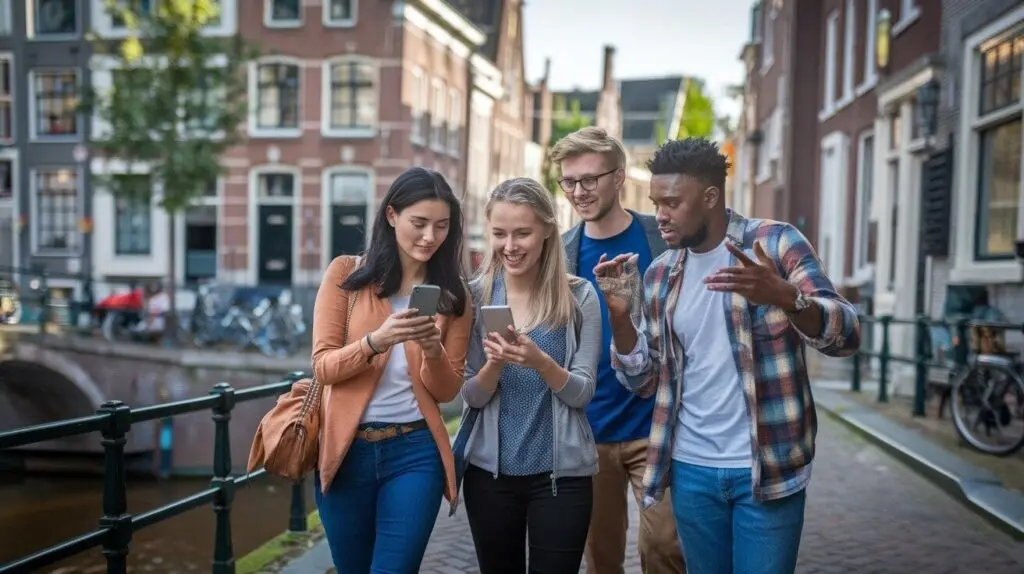
Enschede is a city where the story explains the streets, and without the story it is easy to walk past everything. A city game gives you a route with puzzles that connects the Oude Markt, the old factory quarter and the parks, and tells you what happened at each stop before it moves you on. It suits couples, families and groups equally.
Not sure what to expect? Read how to play first.
Frequently asked questions
How long do I need in Enschede?
A day covers the centre, the museum and Roombeek. Two days if you want to add a cycle ride into Twente or a trip across the German border.
Is Enschede worth visiting?
Yes, if you like cities with a story rather than a skyline. It is also the natural base for the Twente countryside, which is some of the best cycling in the Netherlands.
Is Enschede walkable?
The centre is compact and flat and everything in it is within fifteen minutes on foot. Roombeek and the Volkspark are a slightly longer walk or a short cycle.
What is Enschede known for?
Its textile history, its university, its student nightlife around the Oude Markt, and its position on the German border.
Does Enschede work for a company outing?
It does. The centre is compact, there is plenty of terrace space, and a route-based activity keeps a large group together. See the options for companies and groups.
Walk a city that had to start over
Begin on the Oude Markt, work outwards through the old factory streets, and end in the Volkspark. Want help choosing the right game for your group? Get in touch. Planning more Dutch stops? Our guide to things to do in Amersfoort makes a good pairing.