
The Best Things to Do in Singapore City
2022年11月21日
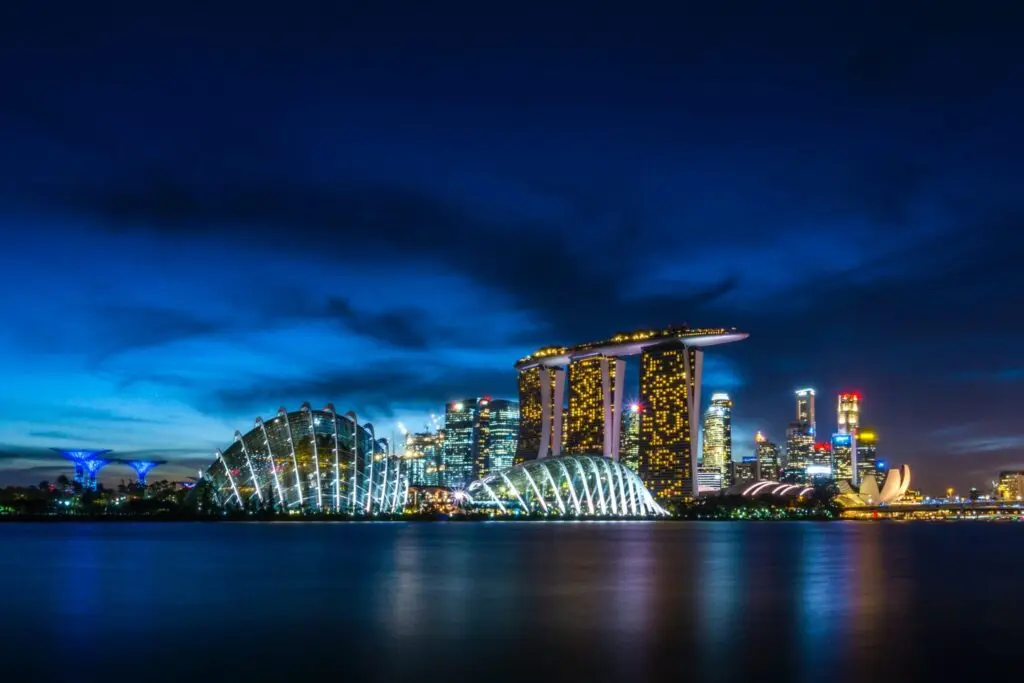
Singapore is easy to visit and easy to misread. Two days spent between Marina Bay, a rooftop bar and a shopping mall will leave you thinking it is a very clean airport with a city attached. Two days spent in the old quarters and the hawker centres will leave you with a completely different impression, and it is the second one that is closer to the truth.
Here is what to do, in both registers.
The waterfront
Gardens by the Bay
The Supertree Grove — vertical steel structures planted with climbing species — is free to walk through, and the light and sound show that runs in the evening is also free. The elevated walkway between the trees and the two glasshouses are ticketed.
Of the two conservatories, the Cloud Forest is the better one: a mountain of planting wrapped around an indoor waterfall, in air-conditioning, which after an afternoon outdoors is its own reward. The Flower Dome is prettier but less strange.
Marina Bay Sands
The three towers with a boat on top. Worth knowing before you plan: the infinity pool is for hotel guests only. The SkyPark observation deck is open to everyone for a fee, and a drink at one of the rooftop bars costs about the same as the deck ticket while including a seat.
Merlion Park
The lion-headed fish spouting water at the bay, invented in 1964 as a tourism symbol and now thoroughly adopted. It takes five minutes, and the view back across the water to the Sands is the reason to stand there.
The hawker centres
This is the part that matters. Hawker culture in Singapore was added to UNESCO's list of intangible cultural heritage in 2020, and eating in these open food courts is the most Singaporean thing you can do.
How it works: each stall does one or two dishes, you queue at whichever one you want, you carry your own tray, and you find a seat yourself. A packet of tissues on a table means the seat is taken — this is a real convention, not a joke, and it is called choping.
What to order: Hainanese chicken rice, laksa, char kway teow, chilli crab if you are in a group and prepared for the mess, roti prata for breakfast, and kaya toast with soft-boiled eggs and coffee, which is the standard Singaporean breakfast and costs almost nothing.
Maxwell Food Centre near Chinatown, Tekka in Little India and Old Airport Road further east are all good starting points. Stalls with long local queues at lunchtime are long queues for a reason.
The old quarters
Chinatown
Shophouses, temples and a food street. The Buddha Tooth Relic Temple is a large modern building in Tang style; the Sri Mariamman Hindu temple is the oldest in the country and sits a few doors away, which tells you something about the place.
Little India
Louder, denser and less tidied-up than the rest of central Singapore. Tekka Centre for food, Serangoon Road for everything else, and the Sri Veeramakaliamman temple in the middle of it. Best on a Sunday evening, when it is at its busiest.
Kampong Glam
The Malay-Muslim quarter around the golden-domed Sultan Mosque, with Arab Street for textiles and Haji Lane, a narrow alley of independent shops and murals. The most photogenic corner of the city, and it knows it.
Katong and Joo Chiat
East of the centre, the Peranakan district: rows of pastel shophouses with tiled facades, built by the Straits Chinese community whose culture blends Chinese, Malay and European elements. Come for laksa and the architecture, and skip the centre for an afternoon.
Green Singapore
The Botanic Gardens are a UNESCO World Heritage site, free to enter, and hold the National Orchid Garden, which is ticketed and worth it. This is where rubber cultivation was developed for Southeast Asia, which changed the economy of a continent.
Further out, Sungei Buloh Wetland Reserve on the northern coast is mangrove and mudflat, with monitor lizards, crabs and migratory birds. It is a different country from Marina Bay and half an hour away.
Practical rules worth knowing
Some of the famous ones are exaggerated and some are not. Chewing gum is not illegal to chew; its sale is restricted, and you can bring your own. Eating and drinking on the MRT is fined, and the fines are enforced. Durian is banned on public transport, and the signs are real.
The climate is the thing people underprepare for: it is hot and humid all year, near the equator, with sudden heavy rain. Plan indoor and outdoor in alternation, carry water, and do not schedule a long walk at two in the afternoon.
Seeing the city on foot
The old quarters are compact and close together, and the interesting details are at street level: shophouse tiles, five-foot ways, temple carvings. A city game gives you a route through them with something to solve at each stop, which suits a city where the good parts are easy to walk past on the way to the next air-conditioned building.
Frequently asked questions
How many days do I need?
Three is comfortable: one for Marina Bay and the gardens, one for the old quarters and hawker centres, one for Katong, the Botanic Gardens or Sentosa.
Is Singapore expensive?
Hotels and alcohol, very. Food and transport, not at all. A hawker centre meal costs a fraction of a restaurant one and is often better.
When should I visit?
Any time; the climate barely changes. February to April is marginally drier. Haze from regional fires can occur in some years, usually mid-year.
Do I need to speak anything but English?
No. English is an official language and is used everywhere.
Is the infinity pool open to visitors?
No. It is for Marina Bay Sands hotel guests only. The observation deck and the rooftop bars are open to everyone.
Does Singapore work for a group?
Very well. The transport is fast and cheap, everything is close, and hawker centres are built for sharing. For organised group activities, see what we run for companies and groups.
Plan the day
A shape that works with the heat: the old quarters early while it is bearable, a hawker lunch, an indoor stop through the hottest part of the afternoon, then Gardens by the Bay from dusk. If you want the morning to have a route, here is how our games work, and you can get in touch about organising one. Travelling on? Our guide to the culture of Osaka covers another city best understood through its food.