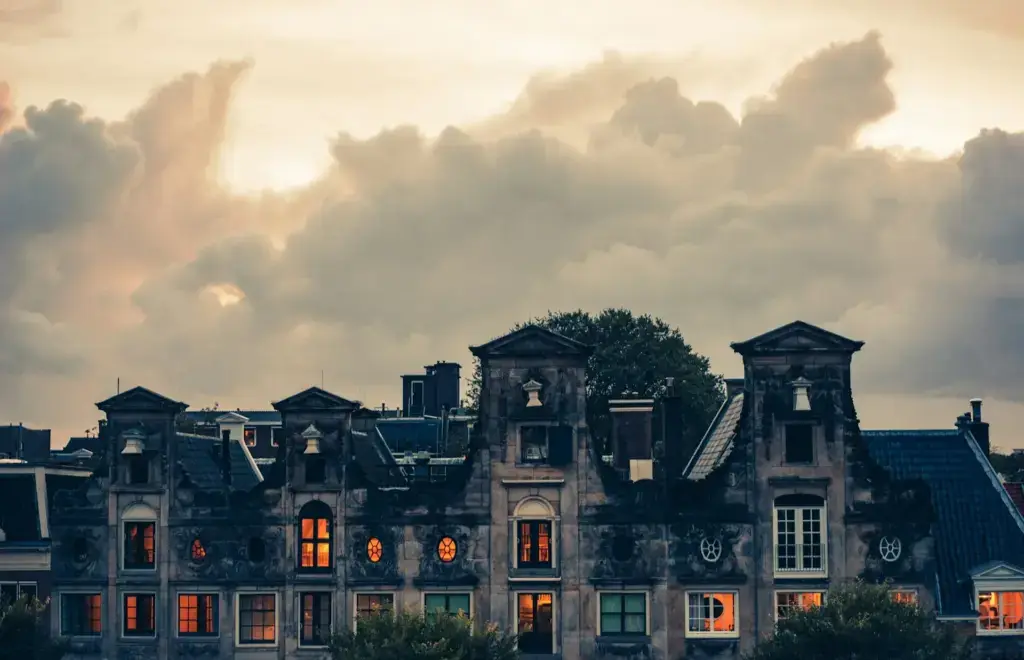
Halloween indoors is easy and slightly samey: decorations, sweets, a film. Halloween outdoors, in a city, is better, the early dark does most of the work for you, but it needs a bit more thought, because a dark city is not a haunted house and children get cold faster than adults notice.
Why a city works well on Halloween night
By late October it is dark by six in most of Europe. That means an evening walk feels like a night walk without anyone having to stay up late. Lit shop windows, empty side streets, old churchyards and narrow lanes all look different than they do at four in the afternoon, and none of it costs anything.
The other advantage is that the season gives you a ready-made story. Every old city centre has something to work with: a plague year, a fire, a gallows site, a legend everyone half-remembers. You do not need to invent a ghost.
Four formats, from easiest to most involved
A lantern walk for small children
Torches or paper lanterns, a short route through familiar streets, and one small task per corner: find a carved pumpkin, count the cats, spot something orange. Half an hour is plenty for under-sevens. This is the version that works for a street or a group of neighbours.
A puzzle route through the centre
For eight to twelve-year-olds, walking without a task falls apart quickly. Give each stop something to solve, a number to read off a plaque, a word hidden in a street name, a photograph to match to a doorway, and the same walk holds them for over an hour.
A story walk for teenagers and adults
Older groups want atmosphere rather than tasks. Pick three or four places with real history behind them, look up what actually happened, and walk between them in order. The genuine version is almost always stranger than the invented one.
A city game
If you would rather not plan it yourself, a city game is a ready-made route with puzzles along the way, played on your phone at your own pace. It is not a Halloween product, but the format suits the season: you are outside, in the dark, walking a route with something to solve. Here is how a game works.
What to skip
A few things go wrong reliably enough to name.
- Jump scares from strangers. Fine in a paid attraction where everyone consented at the door. Not fine on a public street, where you cannot know who you are frightening.
- Cemeteries as a backdrop. They are places people visit to grieve, and around 1 and 2 November especially so. Walk past, not through.
- Real crime as entertainment. If a route touches a real murder, the victims had names and often living relatives. Either treat that seriously or leave it out.
- Overrunning. Children lose interest and get cold at almost exactly the same moment. Plan for an hour and stop early if it is going well.
Practical points for a dark walk
- Something reflective or light-coloured on children beats a black costume in traffic. A cheap reflective band over the costume solves it.
- Costumes are not coats. Layer underneath rather than over.
- Masks limit peripheral vision badly. Face paint is safer near roads.
- Wet leaves on cobbles are slippery, and the light is poor. Sensible shoes, no capes long enough to trip on.
- Agree one meeting point before you set off, in case anyone gets separated.
- Check what is open. Cafés close early on weekday evenings in most city centres, so a warm stop needs planning.
Frequently asked questions
What can you do on Halloween without going to a party?
Walk a route through the city centre with a task at each stop, visit a lantern or light event if one is running, or do a self-guided puzzle route. The dark does the atmosphere for you.
Is a Halloween city walk suitable for young children?
Yes, if you keep it short, well lit and free of jump scares. Half an hour with lanterns and simple looking tasks works better than a long route with a scary theme.
How do I make a walk feel spooky without frightening anyone?
Use atmosphere rather than shocks: dark lanes, old buildings, real stories told well. Anticipation is what makes it fun; being ambushed is what makes it upsetting.
What time should we start?
Just after dusk. In late October that is around six in most of Europe, which is early enough for children and dark enough to feel like night.
Can we do this with a large group?
Split into teams of four to eight and give them the same route with a meeting point at the end. Large groups walking together move at the pace of the slowest and stop talking to each other.
Does it work if it rains?
Mostly yes, with hoods and a shorter route. Wet streets reflect light and look better than dry ones. Heavy wind is the real reason to postpone, not rain.
The dark is the decoration
The thing that makes a Halloween city adventure work is not the props. It is that a familiar place looks unfamiliar after sunset, and that walking through it with a task gives everyone a reason to look properly. Plan an hour, keep it kind, and let the streets do the rest. If you are arranging something for a bigger group and want the practical side handled, we do this for companies and larger groups, and the contact page is the place to ask. For a walk with less costume and more history, our guide to a historical city walk is the sober cousin of this one.
Ghost Hunters
Track down the ghosts and save the city's famous painter. See the games ›