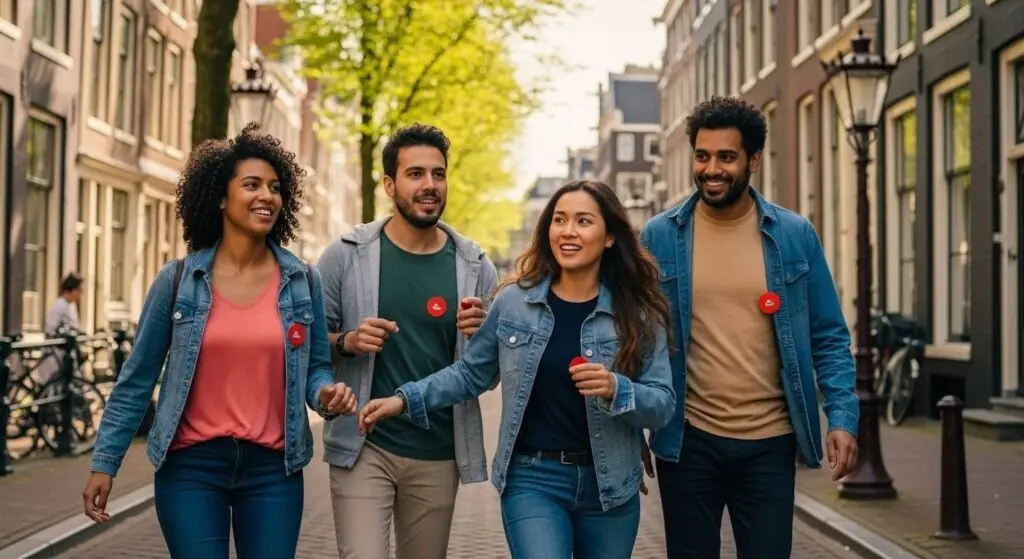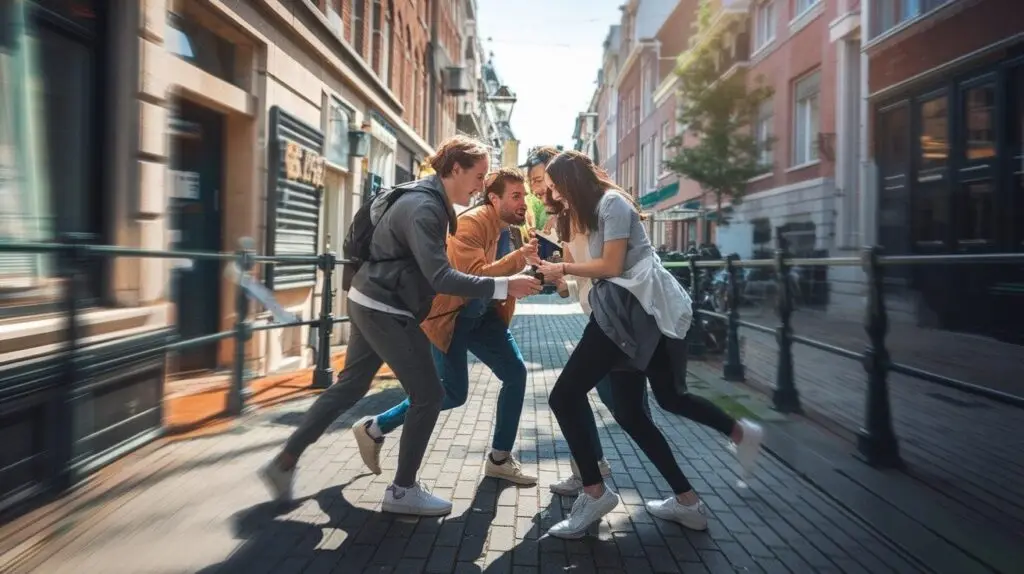
Most stag dos have a well-planned evening and a vague afternoon. Everyone arrives, drops their bags, and then there are four hours to fill before dinner. That gap is where a scavenger hunt earns its place: it gets a group of men who mostly don't know each other walking around a city with something to do.
This is a practical guide to that afternoon, written for whoever ended up organising it.
What a stag do scavenger hunt actually is
You split into teams of four to six, each team gets a phone with a route, and you walk through the city centre solving puzzles tied to the buildings and squares in front of you. Points for correct answers, points for photo challenges, and a scoreboard nobody takes too seriously by the end.
It's not a pub crawl with a worksheet, and it's not a guided tour. It's closer to a two-hour excuse to walk around a city with a task, which turns out to be exactly what a mixed group of friends, brothers and colleagues needs on the first afternoon.
Why it works for a stag group specifically
Stag groups have a particular problem: half the men know the groom well, the other half know him from work or football, and none of them know each other. Standing in a pub at two in the afternoon making conversation is hard work. Walking with a task is not.
Teams also do the introductions for you. Mix the school friends with the work colleagues rather than letting them clump together, and by the end of the route everyone has at least argued about an answer with someone new.
And it works whether or not people are drinking. That matters more than most organisers assume, which is worth a section of its own.
The things organisers get wrong
Assuming everyone drinks
There is almost always someone in the group who isn't drinking, and often they haven't said why. Building the whole day around alcohol quietly excludes them. An activity that works sober keeps them in the group instead of on the edge of it.
Not being upfront about cost
Stag dos have a reputation for costing far more than anyone was told at the start. Send the group the total per person before you book anything, including the activity, dinner and accommodation. People with tighter budgets can then decide which parts they join, without having to say anything awkward in a group chat.
Humiliating the groom
Dares involving strangers, public embarrassment or anything the groom would be ashamed to explain to his partner are a bad idea, and they usually stop being funny for him within the first hour. If the joke needs him to be uncomfortable, it isn't a joke about him; it's a joke at his expense. The good stag stories are the ones the groom retells himself.
Overloading the schedule
Arrival, activity, dinner, out. That's already a full day. Adding a fifth thing means running late for all of them.
Practical planning
Timing. Early afternoon works best. Everyone has arrived, nobody has eaten much, and you finish with enough time to change before dinner. Allow two and a half hours for a two-hour route because groups this size are slow.
Group size. Teams of four to six. With twelve or more, two or three teams competing is much better than one large group where four men at the back just talk among themselves.
Phones and battery. One phone per team, and whoever holds it should start the day above fifty percent. This is the single most common practical problem.
Meeting point. Pick the finish yourself and book a table there. A group of fifteen looking for somewhere to sit at six in the evening on a Saturday will not find one.
Weather. Light rain is fine. Heavy rain is worth moving the start by an hour rather than cancelling, since there's no fixed time slot.
Choosing the city
The cheapest option is usually a city two hours from home rather than a flight. It halves the cost, removes the airport morning, and the stag do is about the group, not the destination.
You can see which cities have routes and pick one that's easy for everyone to reach. If you want to check the format before proposing it to the group, the page on how the game works explains it in a couple of minutes.
For larger groups, or if you need one invoice rather than fifteen payments, there's a setup for groups and companies.
Frequently asked questions
How long does a stag do scavenger hunt take?
Around two to two and a half hours for a group. Teams walk between two and four kilometres depending on the route.
How many people do you need?
It works from four upwards. Above twelve, split into several teams playing the same route and compare scores at the end.
Can you play it while drinking?
Groups often stop for a drink along the way, and the game doesn't mind. It works just as well for anyone not drinking, which is the point.
Do you need to book a specific time?
No. You start when the group is ready, which is useful when someone's train is late.
What does it cost per person?
Prices are per team rather than per person, so a larger group brings the cost per head down. The current price shows before you book.
Is it suitable if some of the group aren't fit?
The routes are flat city-centre walks with plenty of stops. Check the stated distance beforehand if anyone in the group would struggle with a few kilometres.
In short
A scavenger hunt solves the afternoon, mixes a group that doesn't know each other, and works for the men who aren't drinking. Be honest about the cost up front and leave out the dares nobody would want done to them. If you're organising the other kind of weekend too, we've written about a hen party city game along the same lines.
Got a group with an unusual size or a specific city in mind? Ask us through the contact page and we'll tell you whether it fits before you book.
Secrets of …
Discover the stories behind the facades. For everyone. See the games ›