A Christmas scavenger hunt fills the awkward stretches of December: the afternoon before dinner when the children are wound up, the office party where nobody wants another quiz, the day between Christmas and New Year when everyone is restless and the shops are shut.
There are three versions worth knowing, and they need different things from you.
At home, with children
The simplest version and the one that works best on the day itself. Hide twelve small things around the house, write a clue for each, and let the children work through them.
Two variations are better than the plain list. The first is a chain: each clue leads to the next hiding place, so it builds. The second is a hunt that ends at one final present, which turns the whole thing into an unwrapping rather than a competition - useful if the children are close in age and one is much quicker.
Clue ideas that work in most houses: where the socks dry but nobody wears them; the place the coldest things live; something with more legs than a person but no feet; where you look when you want to know what day it is; the thing that sings when the water is ready.
Keep it to half an hour. Children in December are already over-stimulated, and a long hunt ends in tears rather than triumph.
In town, around the Christmas market
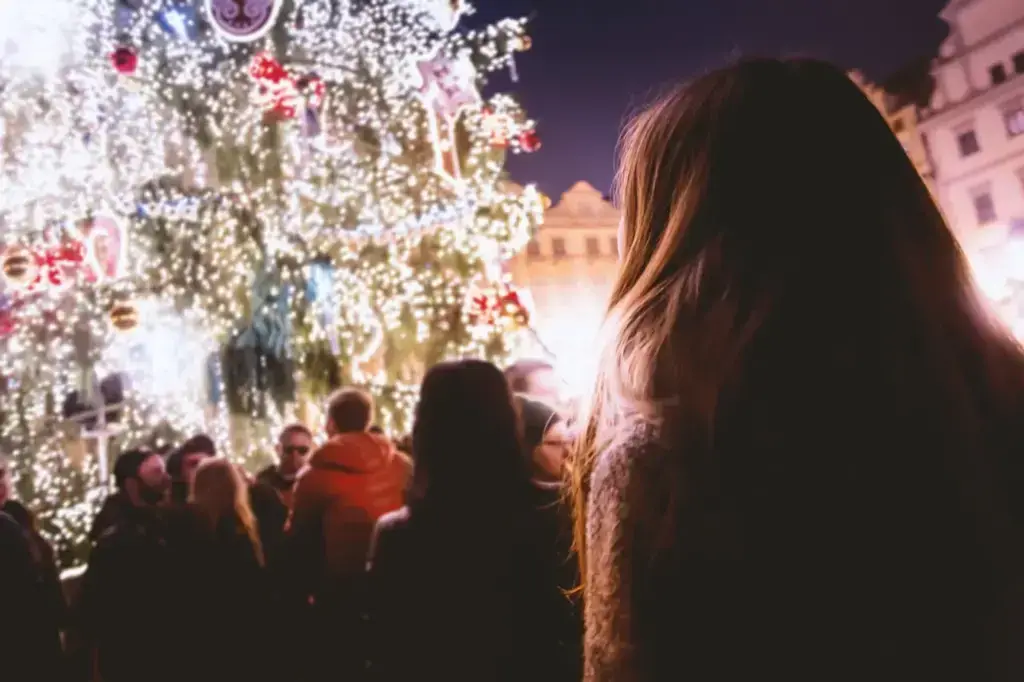
This is the version that gets a family out of the house on a dark afternoon. Rather than hiding anything, you look for things that are already there.
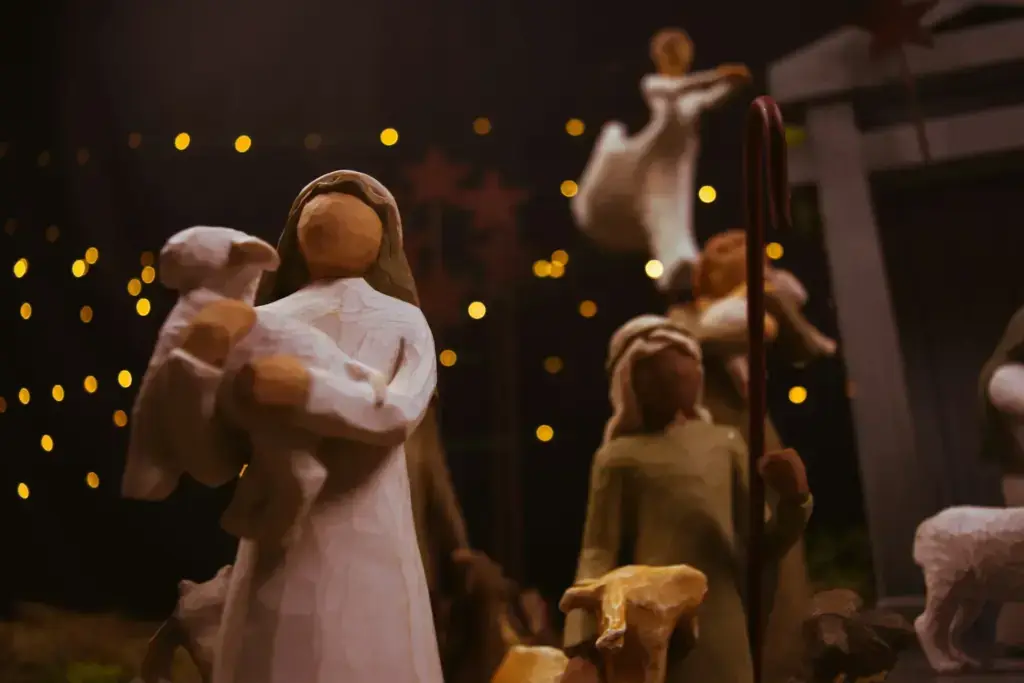
Things to find in almost any European centre in December: a nativity scene with an animal that isn't a sheep; a wreath higher than the first floor; three different colours of fairy light on one street; a shop window with something moving in it; the oldest date on a building on the main square; a stall selling something you can't identify; a choir or brass band, and if there isn't one, a recording of one being played.
Two practical points. Christmas markets are crowded, so keep small children within arm's reach and agree a meeting point before you start. And check the market's actual opening dates - many run only from late November to just before Christmas Eve, and the ones in the smaller towns often close earlier in the evening than you'd expect.
At the office
A hunt around the building or the local streets is a better December activity than most, because it doesn't require anyone to sing, perform or share a fact about themselves.
Keep it to forty-five minutes, in teams of four to six, mixed across departments. Score on answers rather than speed. And avoid anything involving drinking, which quietly excludes people, or dares that put one person in front of everyone.
Christmas-themed clues at work go stale fast, so lean on the building and the neighbourhood instead: the oldest thing in the office, the fire exit nobody uses, what the plaque outside the building opposite says.
Timing, honestly
December afternoons are short. In northern Europe it's dark by four, so an outdoor hunt needs to start by two. Christmas markets are busiest after work and at weekends; a Tuesday afternoon is a different, much calmer place.
The week between Christmas and New Year is the underrated slot. Everyone is at a loose end, the markets are over, the streets are quiet, and a walk with a purpose is exactly what the day needs.
What to leave out
Anything that requires shops to be open, because December opening hours are unpredictable. Tasks that need strangers to take part, which is a lot to ask of people queuing for glühwein. And in a mixed group, assumptions about who celebrates what - a hunt built entirely around one tradition leaves people out, and winter details work just as well.
The ready-made version
If you'd rather not write clues in the middle of December, city routes run all year and work in winter with a coat. The puzzles are tied to buildings rather than decorations, so nothing depends on whether the market is up.
You can see which cities have routes and pick one nearby. Check the daylight before you set out - the page on how the game works explains how long a route takes.
For a work Christmas outing with several teams, there's a setup for companies and groups.
Frequently asked questions
How long should a Christmas scavenger hunt be?
Half an hour indoors with children, an hour to ninety minutes outdoors, forty-five minutes at the office.
What age is it suitable for?
From three with picture clues, from six with clues read aloud, and from nine independently.
Can you do one at a Christmas market?
Yes, but agree a meeting point first and keep young children close - markets are crowded and easy to lose people in.
What can you use as prizes?
Something small. In December there is already enough stuff; choosing the film or the first chocolate works better than another object.
How do you include people who don't celebrate Christmas?
Build the clues around winter and the city rather than around one tradition. It costs nothing and nobody sits it out.
Does it work in the dark?
Only with lit streets and older children. Otherwise start early - in much of northern Europe it's dark by four in late December.
In short
Pick the version for the setting, keep it short, start before dark, and don't build the whole thing around one tradition. For clue-writing in general, we've collected more scavenger hunt ideas.
Planning something for a group this December? Ask us through the contact page.
Christmas Carol
A festive walk with a story, in the winter season. See the games ›