A medieval city that is younger than your grandparents
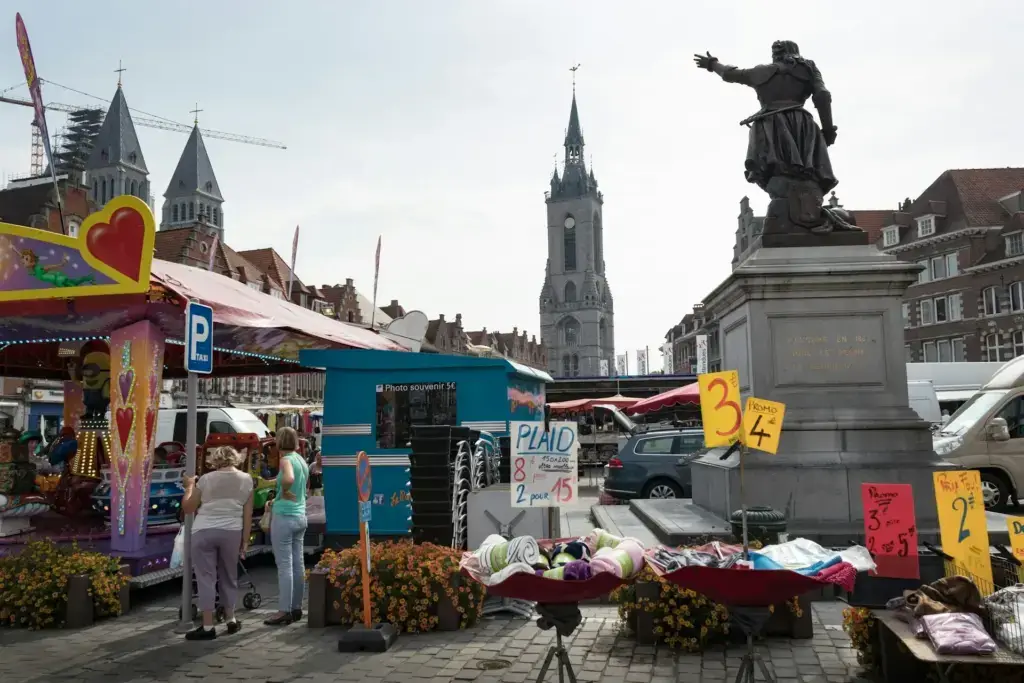
Stand on the Grote Markt in Ypres and you are looking at a Gothic cloth hall, a cathedral and rows of stepped gables. Almost none of it is old. Between 1914 and 1918 the town sat inside a salient in the front line and was shelled until there was nothing left but rubble and stumps. After the war the people of Ypres made a decision that still shapes the place: rather than build something modern, they rebuilt the medieval town exactly as it had been, stone by stone, over several decades.
Knowing that changes how you walk around. The Cloth Hall looks 13th century because that is what it was copied from, not because it survived.
The Last Post at the Menin Gate
Every evening at eight o'clock, traffic through the Menin Gate stops and buglers from the local fire brigade sound the Last Post. It has happened nightly since 1928, pausing only during the German occupation in the Second World War and resuming the same day the town was liberated.
The gate itself is a memorial to soldiers of the Commonwealth who died in this sector and have no known grave. Their names cover the walls and the stairs, tens of thousands of them. There is no ticket and no announcement. People simply gather, it lasts a few minutes, and then the street opens again. Arrive fifteen or twenty minutes early if you want to stand somewhere you can see.
In Flanders Fields Museum
The museum inside the Cloth Hall takes its name from the poem John McCrae wrote near here in 1915. It does not glorify anything. It follows individual people through the war using letters, objects and film, and it uses the building itself as evidence, since the hall was destroyed in the same shelling the exhibition describes. If you climb the belfry tower you get the whole flat landscape of the salient laid out in front of you, which is the fastest way to understand why this ground was fought over so hard.
Out into the fields
The battlefield sites are spread over the countryside around town, and a car or a guided tour makes them far easier to reach than public transport does.
Tyne Cot, near Passendale, is the largest Commonwealth war cemetery in the world. Row after row of white headstones on a gentle slope, with a wall at the back for the missing.
Hill 60 is not a natural hill at all. It was made from earth dug out when the railway cutting was built, and because it stood a few metres above flat land it became worth dying for. The ground there is still churned and pitted, left as it was.
The German cemetery at Vladslo and the one at Langemark feel entirely different from the Commonwealth sites: darker stone, mass graves, far less white.
The Vauban ramparts
The southern edge of the old town still has its earth ramparts, reinforced in the 17th century under the French military engineer Vauban. Today it is a quiet green walk above the moat, with the Ramparts Cemetery tucked into it, one of the smallest and most peaceful war cemeteries in the region. It is the best half hour in Ypres for clearing your head after a museum morning.
Beer, hops and the local table
This corner of West Flanders is hop country. Poperinge, a short drive west, has grown hops for centuries and the fields with their tall wire frames are unmistakable in late summer. In Ypres itself you can drink and eat well without hunting for anything fancy: order a local blond beer, get a cone of fries with the sauce you least recognise, and try a beef stew cooked in beer if it is on the menu. Ask what is brewed nearby rather than what is famous, and you will get a better answer.
Seeing Ypres by playing it
Ypres is compact enough that you can cross it in fifteen minutes, which means the risk is walking past things without registering them. A city game gives you a reason to look up at gables, read plaques and take the side street instead of the main one. You solve clues as you go, so the route does the guiding and you do the noticing. It works with family, with friends and with a work group.
Frequently asked questions
How long do I need in Ypres?
One full day covers the museum, the ramparts and the Last Post. Two days lets you add Tyne Cot, Hill 60 and the German cemeteries without rushing.
Do I need to book for the Last Post?
No. It is free and open to anyone standing there. On busy dates around anniversaries the crowd is large, so come early.
Is Ypres suitable for children?
The town is easy and safe, and the ramparts walk and belfry climb work well for kids. The war museums are serious in tone, so judge that by the child.
Can I visit the battlefields without a car?
Some sites are walkable or reachable by bike from town, but the spread-out cemeteries are much easier with a car or an organised tour.
What is the best time to visit?
Spring and early autumn are comfortable and quieter. The town fills up around 11 November and other commemoration dates, which is moving but crowded.
Come and play in Ypres
If you want to see the town properly rather than tick off three sights, try a playing route through it. Here is how it works, and if you are organising something for a team or a larger group, we have formats for that on this page. Questions about dates, group sizes or routes? Get in touch. And if you are continuing through West Flanders, Bruges is an easy next stop.