
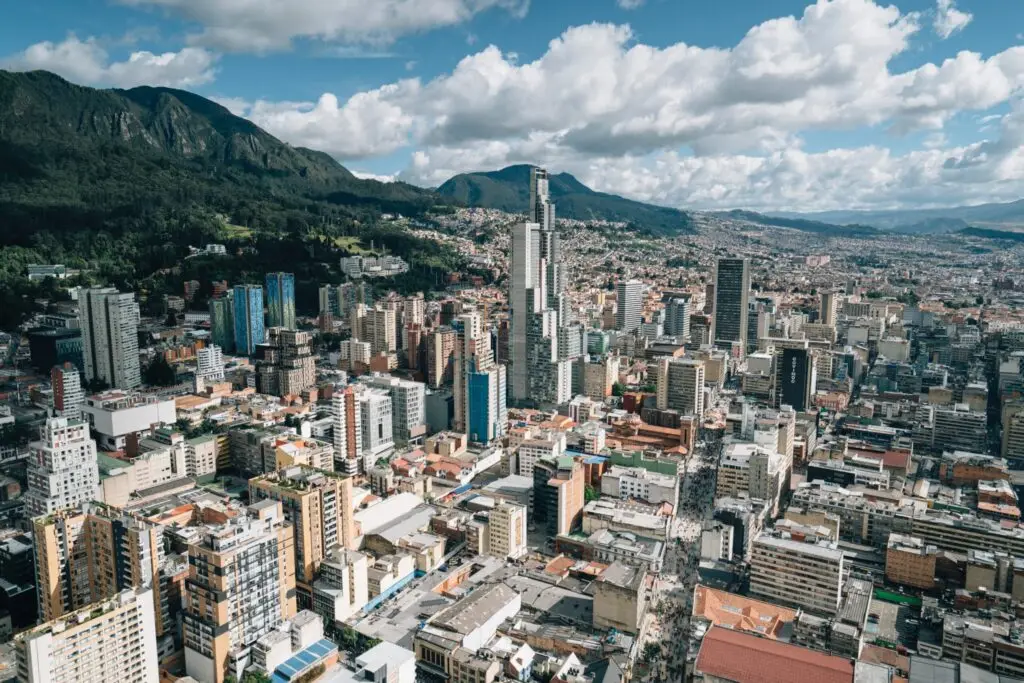
Bogotá sits at 2,640 metres in the Andes, which explains most of its cooking. This is a cold, wet, high-altitude city, and the food is built for that: thick soups, potatoes in several varieties at once, hot chocolate, and starch in every form the region grows.
It is also a city where the national cuisine gets confused, because Colombia's regions cook very differently and the famous dishes are not all from the capital. Here is what Bogotá actually eats, where to eat it, and which plates come from somewhere else.
Ajiaco: the dish of the city
Ajiaco santafereño is the Bogotá dish, and it is a soup that takes the altitude seriously. Chicken, corn on the cob, and three different varieties of potato, one of which dissolves completely and thickens the whole pot, flavoured with guascas, a local herb that grows as a weed and that almost nothing else in the world uses.
It arrives with capers, cream and half an avocado on the side, and you add them yourself. Locals argue about the order. It is a full meal, it costs very little, and on a grey Bogotá afternoon it is exactly right.
Tamal and hot chocolate
The classic Bogotá breakfast, especially on Sundays. A tamal santafereño is rice, chicken, pork, peas and carrots wrapped in a banana leaf and steamed, and it comes with a cup of hot chocolate.
Here is the part visitors find strange: a piece of fresh white cheese is served with the chocolate, and you drop it into the cup, let it melt, and eat it with a spoon at the end. This is not a quirk of one café. It is how the city drinks chocolate, and refusing the cheese is the mistake.
The other traditional breakfast is changua, a soup of milk, water, spring onion and a poached egg, eaten with bread. It is an acquired taste and locals will warn you.
What is not from Bogotá
Two honest corrections, because guides get these wrong constantly.
Bandeja paisa, the enormous tray of beans, rice, chorizo, chicharrón, fried egg, plantain, avocado and arepa, is from Antioquia, the region around Medellín. You can eat it in Bogotá, and plenty of restaurants serve it, but it is not a Bogotá dish and no one here grew up on it.
Lechona, the whole roast pig stuffed with rice and peas, is from Tolima, a few hours south-west. Again, widely available here, not local.
Arepas are eaten across Colombia, but the Bogotá version is thin, plain and small, usually eaten alongside something else rather than stuffed. The thick stuffed ones you may have had elsewhere are from the coast or from Venezuela.
Where to eat
Plaza de Mercado de Paloquemao
The big wholesale and retail market, and the single best food experience in the city. Go early, the flower section runs from before dawn, and eat breakfast at the counters inside. The fruit section is the reason to come: Colombia grows fruits that have no English names and that most visitors have never seen. Ask for a tasting; the vendors will cut things open for you.
La Candelaria
The colonial old town, and where most visitors stay. It has the traditional restaurants, the chocolate-and-tamal cafés, and a number of places that have been serving the same three dishes for decades. It also has the tourist-priced ones; a block or two off the main streets is enough to fix that.
Usaquén
A former village absorbed by the north of the city, with a Sunday flea market and a concentration of restaurants. Good for a long lunch away from the centre.
Zona G and Chapinero
Where modern Colombian cooking happens: chefs working with Amazonian and Pacific ingredients that were not on Bogotá menus a generation ago. This is where the city's food is going, as opposed to where it comes from.
What to drink
Colombia has exported its best coffee for a century and kept the rest, which is why the domestic reputation was poor for a long time. That has changed sharply: Bogotá now has a serious specialty coffee scene, and you can drink single-origin Colombian coffee here that never leaves the country.
Chicha, the fermented maize drink, predates the Spanish and was banned nationally from 1948 until 1991. It is sold again in La Candelaria, particularly around the Chorro de Quevedo, and it is worth trying once.
Aguardiente is the anise spirit that comes out at every celebration, drunk in small shots without mixing. Canelazo, hot aguardiente with cinnamon and panela, is the cold-night version.
Working off lunch
Monserrate
The mountain above the city, at over 3,100 metres, with a church at the top and a funicular and cable car going up. The view is the whole city spread across the plateau. Do it on a clear morning.
The Gold Museum
One of the great museums in South America, holding thousands of pre-Hispanic gold objects, including the Muisca raft that gave rise to the El Dorado legend. The legend was about a ceremony at a lake outside Bogotá, not a city of gold.
Ciclovía
Every Sunday and public holiday, over a hundred kilometres of Bogotá streets close to cars from early morning until the afternoon, and the city fills with cyclists, runners and skaters. It has been running since the 1970s and has been copied around the world. Rent a bike and join it.
Walking the old centre
La Candelaria is compact, steep and full of detail: painted doorways, university buildings, street art that the city eventually chose to permit rather than fight. A city game gives you a route through it with something to solve at each stop, which is a good way to build an appetite before lunch.
Frequently asked questions
Will the altitude affect eating and drinking?
Alcohol hits harder at 2,640 metres, and heavy meals sit differently. Take the first day gently and drink water.
Is street food safe?
Generally yes at busy stalls. Fruit cut in front of you, arepas from a griddle and empanadas from a fryer are all fine.
Is Bogotá safe for visitors?
The areas visitors use are fine with normal city precautions. The local phrase is no dar papaya, do not give someone an easy opportunity. Keep your phone away on the street, use ride-hailing apps at night, and ask locally about neighbourhoods you do not know.
When should I visit?
December to March and July to August are the driest. Bogotá's temperature barely changes all year, around 14°C most days, so bring layers rather than summer clothes.
Do I need Spanish?
It helps a great deal. English is less widely spoken here than in tourist-heavy Latin American cities, though it is common in restaurants in Zona G and Chapinero.
Does Bogotá work for a group?
Well, the food is shared by default and the old centre is walkable. For organised group activities, see what we run for companies and groups.
Plan the day
A shape that works: Paloquemao market early, La Candelaria and the Gold Museum in the late morning, ajiaco for a long lunch, Monserrate in the afternoon if the sky is clear, and chocolate with cheese to finish. If you want the morning to have a route, here is how our games work, and you can get in touch about organising one. Travelling on through Latin America? Our guide to the most typical things in Mexico City covers another capital best understood through its food.
