

Sherlock Holmes · Murder mystery
Seoul Self-Guided Detective Murder Mystery Game
1.5–2 hours · 1–4 players per team · free Loquiz app€19.95 per team
 Group games: teams against each other
Race Through Seoul
Expected soon in Seoul
A city game where teams play against each other: at least 2 teams of 1–4 players, each team on its own phone.

Walk through the real city. The map shows every zone:  free,
 taken by a team in its colour, or
 locked for a few minutes. The game starts at
 .
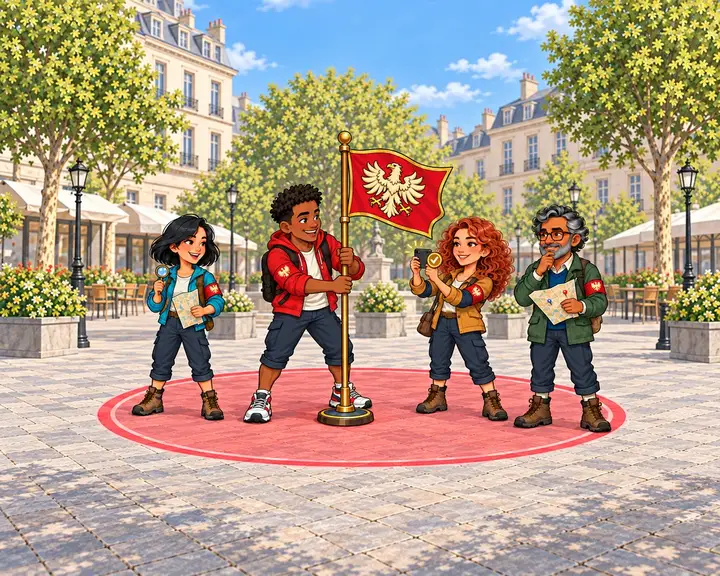
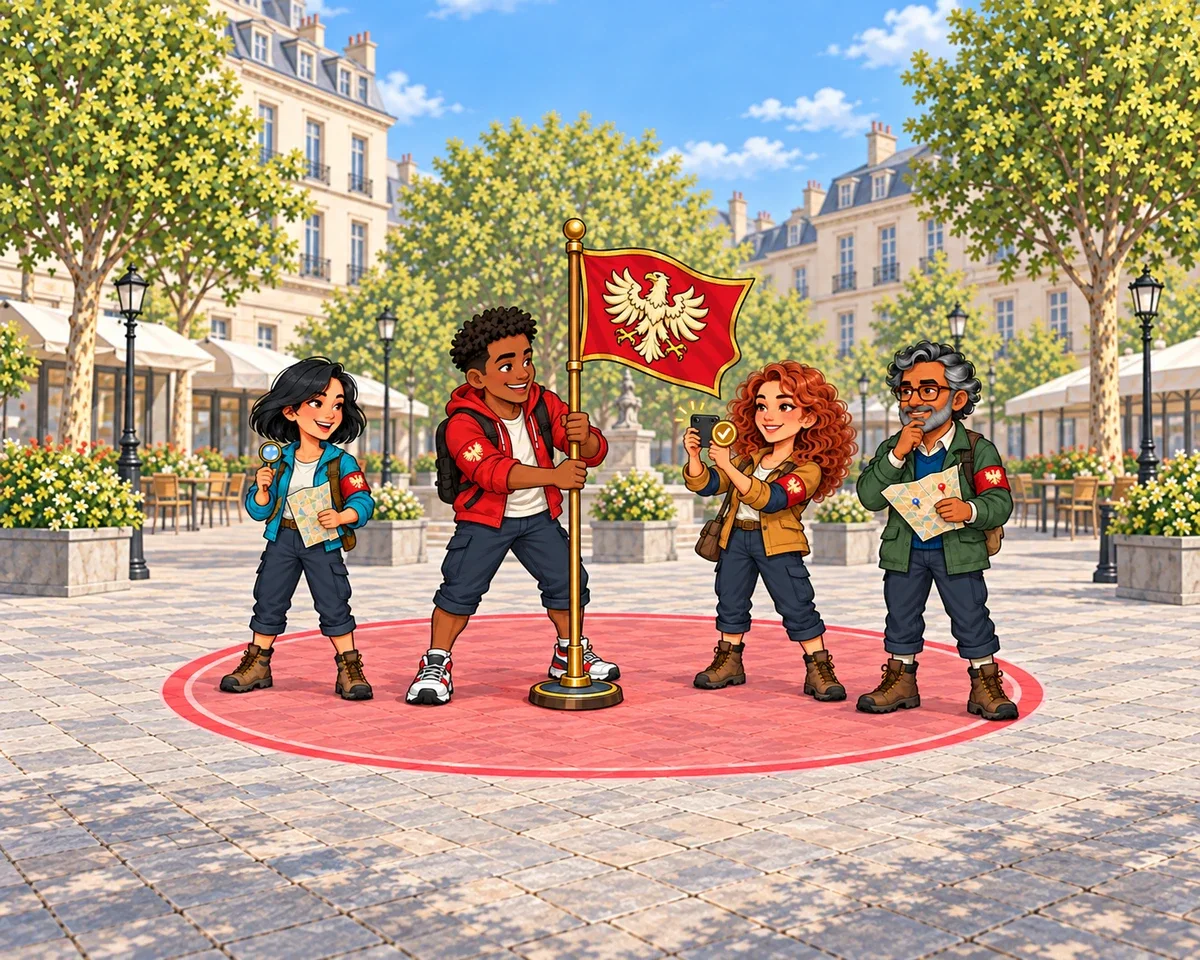
Step into a zone, open its task and send your proof: an answer, a photo or a video. Get it right and the zone takes your colour , and you earn 30 ducats  .
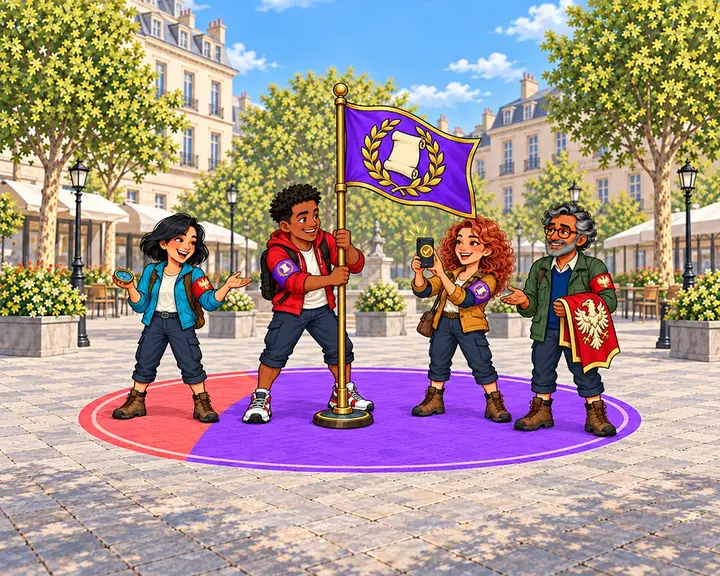
Other teams can take your zones once the lock is over, and you can take theirs. A zone  stays with the team that conquers it. The first team at a bonus spot
 gets a power-up in its backpack
 .
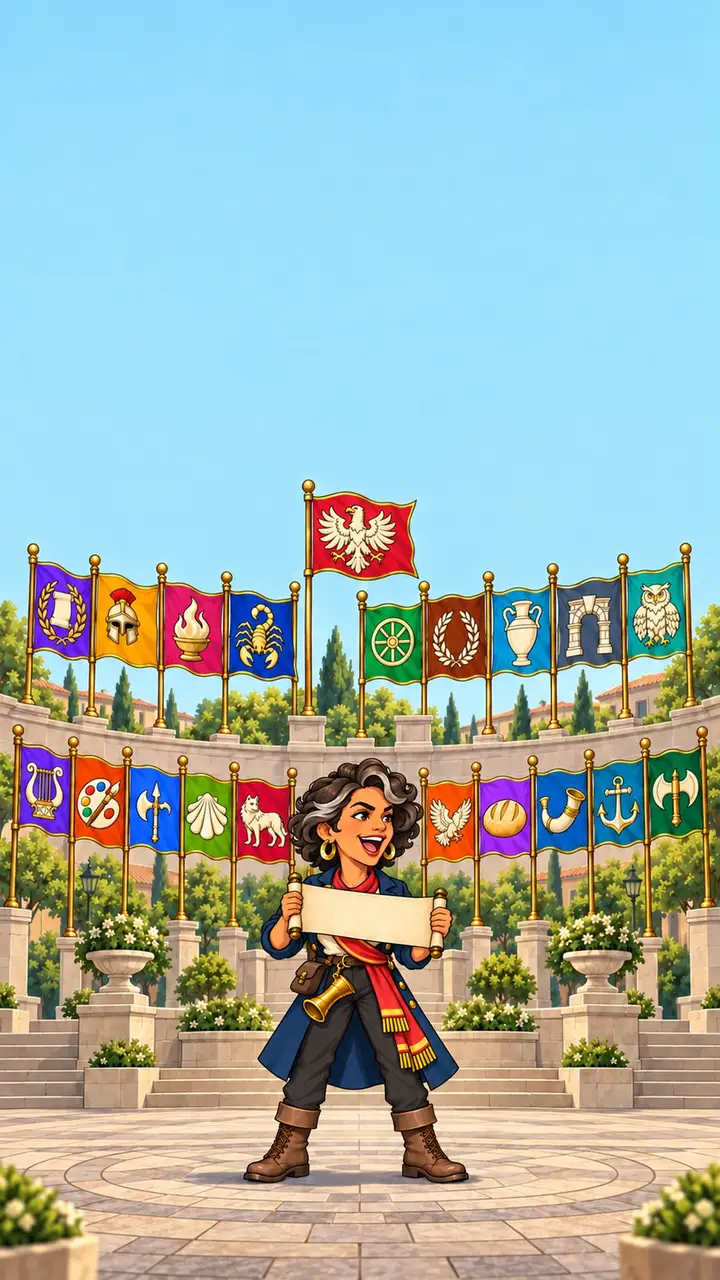
When the time is up, the team with the most points wins; with equal points, the most ducats . Be at the meeting point  in time: the herald calls everyone together.
Every zone has a set of tasks about what you can really find there. Each team gets a different one, and a new one every time it comes back, so answers can't be passed on.
Each team picks a faction: a group with its own story, strengths and characters.
“No one passes unasked”
The sumunjang, the royal gatekeepers of Gyeongbokgung, opened and closed the palace gates with drums and ceremony. Today their changing of the guard is played again in front of Gwanghwamun.


“Letters for everyone”
King Sejong's scholars of the Jiphyeonjeon worked with him on Hangeul, the Korean alphabet, proclaimed in 1446 so that every person could learn to read.
“Twelve ships are enough”
The sailors of Admiral Yi Sun-sin, whose iron-roofed turtle ships beat a far bigger fleet in the war of 1592-1598. Yi's statue looks down Gwanghwamun Square.
“We read the sky”
Jang Yeong-sil and the court astronomers built rain gauges, sundials and water clocks for King Sejong. Copies stand in front of his statue.
“A good price and a good word”
The licensed shops of Jongno, the Sijeon, sold silk, paper and fish to the capital for 500 years. Their street is still Seoul's main street.
“When the bell rings, the city wakes”
For centuries the great bell on Jongno opened the city gates at dawn and closed them at night. Today it rings in the New Year for the whole country.
“One voice, one drum, one story”
Pansori is Korea's great story-singing: one singer with a fan and one drummer can hold a crowd for hours. It is on UNESCO's list of world heritage.
“Higher on the rope”
The wandering Namsadang troupes travelled from village to village with tightrope walking, mask dance, plate spinning and farmers' music.
“Paint the king, paint the world”
The Dohwaseo was the royal painting office of Joseon. Its painters made the king's portraits and the great procession scrolls; it stood where Insadong is now.
“A poem for every guest”
The gisaeng were trained artists of Joseon: music, dance, poetry. Some, like Hwang Jini, wrote poems that every Korean child still learns.
“Light the way”
Every spring, before Buddha's birthday, thousands of hand-made lotus lanterns light up Jogyesa and Jongno for the Lotus Lantern Festival.
“Rule with virtue”
The kings and queens of Joseon ruled from Gyeongbokgung for five centuries. Their palace, their gates and their main street are all in this field.
“Measure the city”
In 1394 Jeong Do-jeon and the builders of the new capital Hanyang laid out the palace, the walls, the gates and the main street in a few years.
“The message never stops”
The pabal was Joseon's express post: riders and runners carried urgent letters from relay station to relay station, day and night.
“Rise when the country calls”
The Uibyeong were volunteer fighters, farmers and scholars who rose to defend the country in the wars of 1592 and later.
“Every language opens a door”
The Sayeogwon trained Joseon's interpreters in Chinese, Mongolian, Japanese and Jurchen; they travelled with every embassy.
“Not afraid of anything”
Tigers once came down from the mountains around Seoul, even into the palace. Joseon kept a special unit of tiger hunters.
“A bit of mischief”
Dokkaebi are the goblins of Korean folk tales: they love wrestling, buckwheat jelly and practical jokes, and their magic club can make gold appear.
“Feed the palace”
The Suragan was the royal kitchen: cooks made twelve-dish meals for the king and great jars of kimchi and soy sauce for the palace.
“We know right from wrong”
The haechi is a lion-like guardian that can tell right from wrong and keeps fire away. Two stand in front of Gwanghwamun; it is Seoul's symbol.

Every 20 minutes the herald hides chests  in the streets. The first team within 30 m opens one: ducats , a potion, a defence or something to leave for others.

You start with 50 ducats and earn more by conquering, holding zones and approved photos. Spend them at the merchant  : you can buy anywhere, and at his spot you get 20% off.

Leave a bomb, trap, fog, curse or sabotage on the street  . Only your team sees it; the team that walks into it is hit. Fog
 hides their map beyond 100 m. A scout
 shows drops near you
 : walk to one to defuse it.
 Speed potionWait times and zone locks halved for 10 minutes.
 Wisdom potionRemoves one wrong answer from your next multiple-choice question.
 Strength potionYour next conquest scores double.
 ShieldBlocks the next attack on your team (20 seconds to react).
 MirrorSends the next attack straight back to the team that left it.
 AntidoteEnds fog, a trap or a curse at once.
 ScoutShows other teams' drops within 100 m for 2 minutes; walk to one to defuse it.BombLeave it on the street: the team that walks into it loses 25 points.
 TrapLeave it on the street: 3 minutes no conquering and no answering.
 FogLeave it on the street: for 4 minutes their map shows only 100 m around them.
 CurseLeave it on the street: on their next 2 questions a wrong answer costs double.
 SabotageLeave it on the street: steals one thing from their backpack (or 30 ducats).
You play on your own. The organiser opens the game master page, chooses the default language and the playing time, and starts the game. From then on everything runs by itself on every phone: the zones, the chests, the merchant and the final count.
Often chosen by companiesSomeone leads the game from the game master page: follows every team live with its points and zones, sends messages to all teams, adds 15 minutes or stops the game, gives a team a power-up or puts a chest right next to it, and looks at the photos and videos. The game master never sees the answers.
€199.00 including 5 teams, €19.95 per extra team
The organiser sets up the game on the game master page (the default language and the playing time) and starts it for all teams.
Every player can pick and switch the language on their own phone.
City Conquest is on its way to Seoul. Want to play it with your group as one of the first? Ask us and we will let you know as soon as it is ready.