For about two weeks every February, Nice hands its centre over to papier-mâché. Enormous heads roll down the boulevards, flowers are thrown at the crowd from moving floats on the seafront, and the whole thing ends with a giant king going up in flames above the bay. It is one of the largest carnivals in Europe and, unlike some, it is genuinely built for spectators.
Dates move with Lent and change every year, so check the official programme before booking anything. What follows is what the carnival actually consists of and how to see it without wasting money.
The Corso Carnavalesque: the big parade
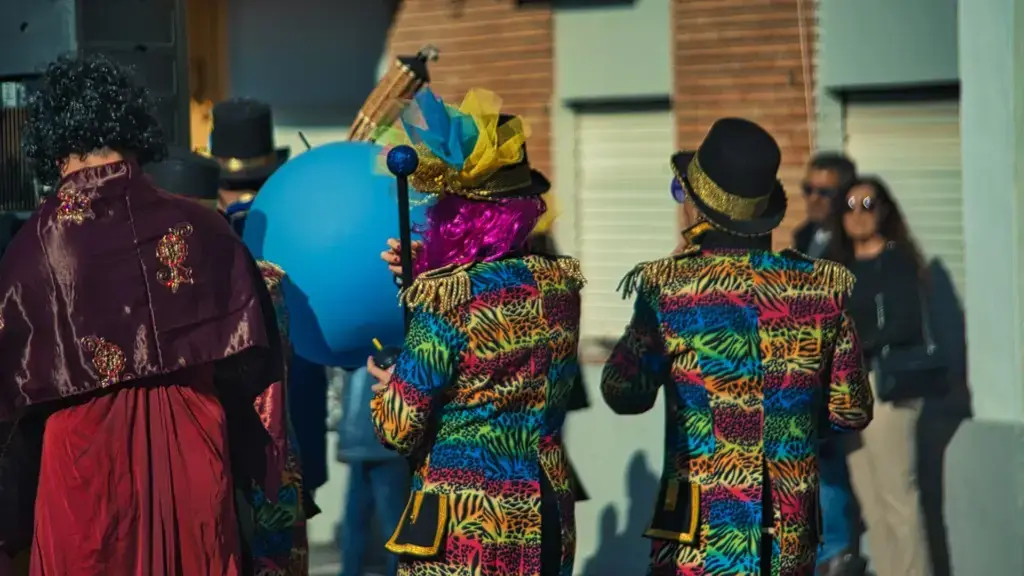
The main parades run through Place Masséna and the surrounding avenues, day and night. Around twenty floats, built over months in a workshop outside the city, carry satirical figures on that year's theme, usually a jab at politics, celebrity or technology. Between them come grosses têtes, walkers wearing oversized papier-mâché heads, and street bands from all over the world.
The night version is the better one. The floats are lit from inside, the colours are stronger against the dark, and the atmosphere is looser.
The Bataille de Fleurs: the flower battle
The flower parade runs along the Promenade des Anglais with the sea behind it. Costumed performers on the floats throw thousands of flowers into the crowd, mimosa, gerbera, lilies, mostly grown in the region. You will go home with an armful if you stand near the barrier and are prepared to reach.
This is the one to bring children to, and the one most worth a seated ticket, because the flowers are thrown towards the stands.
The King, and how he ends
Each carnival has a King, a huge float built around the year's theme, who presides over the whole fortnight. On the final evening he is destroyed in a closing ceremony on the seafront with fireworks over the Baie des Anges. It is theatrical, slightly absurd, and the best free thing in the entire programme.
Tickets, seats and standing
Both the corso and the flower battle have ticketed seating and cheaper standing areas inside the paying zone, plus limited free viewing outside it. Seats are worth it for the flower battle and for anyone who does not want to stand for two hours; standing is fine and more fun for the night parade.
Come in costume if you like, people who do get better treatment from the performers, and some events offer discounts to those in disguise. Bags are checked at the entrances, so travel light and arrive well before the start.
What else to do while you are there
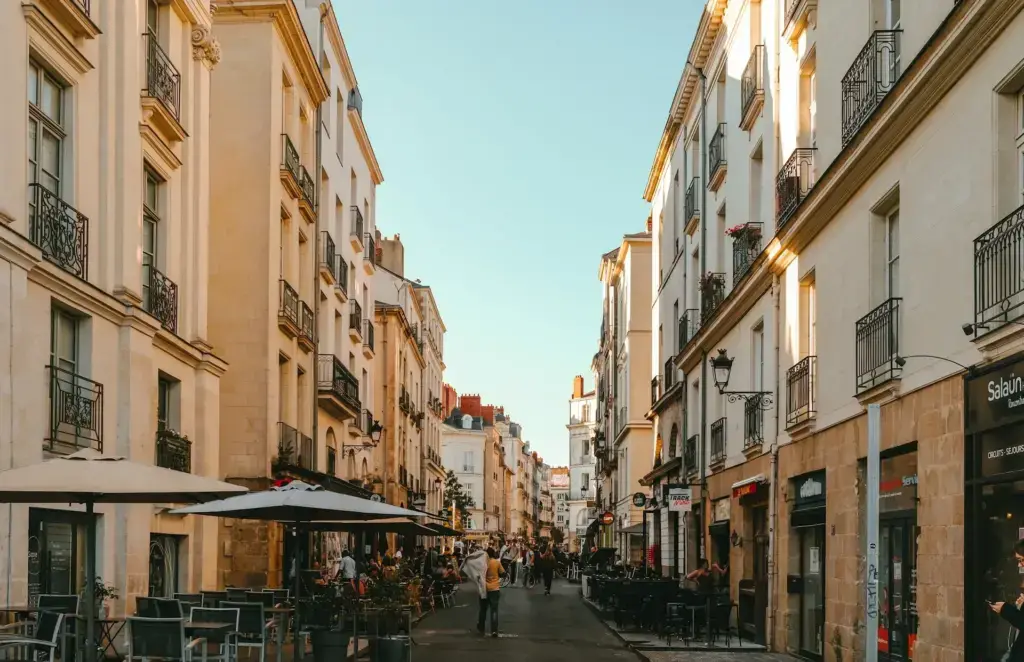
The carnival takes up an afternoon or an evening, not a whole day. In between, walk Vieux Nice and its narrow streets, climb the Colline du Château for the view over the tiled roofs and the bay, eat socca, the chickpea pancake sold hot by the slice, at the Cours Saleya market, and take the coast road to Villefranche-sur-Mer, fifteen minutes away by train.
Turn a free afternoon into a game
If you have a gap between parades, a city game fills it well. You explore in small teams with your phone, solving puzzles tied to real streets and buildings, and you cover the old town properly instead of drifting through it. There is no guide and no fixed start time, so you fit it around the carnival programme rather than the other way round.
It works for friends, families and company outings and larger groups. The how it works page explains it step by step.
Frequently asked questions
When is the Nice Carnival?
In February, over roughly two weeks ending around Shrove Tuesday. Exact dates shift each year with the date of Lent, so check the official programme.
How old is the carnival?
Carnival celebrations in Nice are documented as far back as the thirteenth century. The modern organised version, with parades and built floats, dates from the 1870s.
Do you have to pay?
Not necessarily. Seated and standing tickets exist for the main parades, but the closing ceremony and much of the street atmosphere are free.
Is it good for children?
Yes, especially the flower battle. Book seats if they are small, since the crowd at the barriers is dense.
Should I dress up?
You will not be the only one. Costumes are encouraged and sometimes rewarded with reduced entry to certain events.
Where should I stay?
Anywhere within walking distance of Place Masséna or the Promenade. Book early, carnival fortnight is one of the busiest periods of the Nice year.
Go, and take an umbrella for the flowers
The carnival is loud, silly and much better in person than in photographs. See all the cities where we run games, read more about the city itself in Quests in Nice, or contact us if you are planning a trip for a group.