
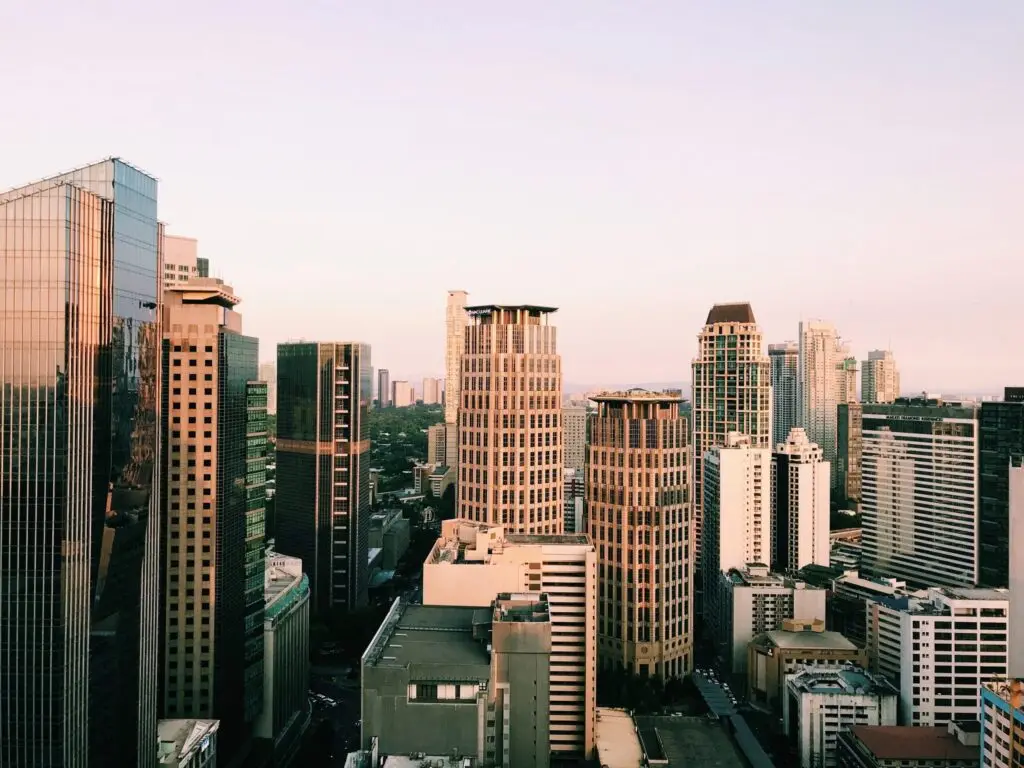
Manila is not an easy first impression. It is enormous, hot, and the traffic is among the worst in the world. Visitors who give it a day between flights usually leave unimpressed, and that is a shame, because it holds one of the most layered histories in Asia, Spanish, American, Japanese and Filipino, in that order and all on top of each other, and some of the best food on the continent.
Here is what to see, what to eat, and how to plan a day that survives the traffic.
Intramuros
The walled city built by the Spanish in the sixteenth century, and the reason to come. Manila was the Asian end of the galleon trade that ran to Acapulco for 250 years, and Intramuros was its administrative and religious heart.
What you see today is partly reconstruction, and the reason is grim. In February and March 1945, during the battle to retake the city from Japanese forces, Intramuros was almost entirely destroyed, and around a hundred thousand civilians died in Manila. It was among the most devastating urban battles of the war and it is not well known outside the Philippines. Knowing it changes what you are looking at.
San Agustin Church
The oldest stone church in the Philippines, completed in 1607, and the only building in Intramuros that survived the war largely intact. It is a UNESCO World Heritage site as part of a group of baroque churches, and its trompe-l'œil painted ceiling is the best interior in Manila.
Fort Santiago
The citadel at the mouth of the Pasig river. José Rizal, the writer whose novels helped set off the Philippine revolution, was held here before his execution in 1896; his cell is a shrine, and brass footprints in the ground trace his final walk. The dungeons flooded at high tide and prisoners drowned in them.
Casa Manila
A reconstructed colonial-era merchant house, furnished as it would have been. Small, and the fastest way to understand how the Spanish-era elite lived.
Binondo
Across the river is the oldest Chinatown in the world, established in 1594 for Catholic Chinese residents. It is still a working commercial district rather than a heritage zone: gold shops, herbalists, hardware, temples and food, all at once and all crowded.
This is where you eat. Look for lumpia, hopia, siopao, dumplings, fresh noodles and the Filipino-Chinese hybrids that exist nowhere else. A guided food walk is genuinely useful here, because the best places are unmarked and the district is hard to read.
Rizal Park and the museums
The large open park south of Intramuros, where Rizal was shot and where his monument now stands, guarded permanently. Around it are the National Museum complex, Fine Arts, Anthropology and Natural History, which are free to enter and considerably better than most visitors expect. The Spoliarium, Juan Luna's enormous 1884 painting of dead gladiators being dragged from a Roman arena, is in the Fine Arts building and is worth the trip on its own.
Quiapo
North of Binondo, built around Quiapo Church and its statue of the Black Nazarene. Every January the statue is carried through the city in a procession that draws crowds in the millions and takes many hours to travel a short distance. Outside that week, the church district is a dense market of herbal remedies, amulets, candles and street food. It is the least polished and most alive part of central Manila.
What to eat
Filipino food is less exported than Thai or Vietnamese and rewards the visitor who tries properly.
Adobo, meat braised in vinegar, soy and garlic, is the national dish and every family disputes the correct version. Sinigang is a sour tamarind broth and the thing Filipinos abroad miss most. Lechon, whole roast pig, is the centre of every celebration. Kare-kare is oxtail in peanut sauce, served with fermented shrimp paste. Halo-halo is the shaved-ice dessert with everything in it, and in the heat it makes complete sense.
Breakfast is a silog: garlic rice, a fried egg and cured meat, named as a compound of the parts. Tapsilog is the standard one.
Getting around
The traffic is the single biggest constraint on a day in Manila. Cross-city journeys that look short can take two hours. Plan geographically: do Intramuros, Binondo, Quiapo and Rizal Park as one connected day, since they are all within walking or short-ride distance of each other, and leave Makati or BGC for a separate day.
Jeepneys, the extended jeeps used as shared minibuses, are gradually being replaced under a national modernisation programme, so the classic ones are becoming less common. Ride-hailing apps work well and are the practical option for visitors.
Seeing the old city on foot
Intramuros is walled, flat and small enough to cross in twenty minutes, which makes it the one part of Manila that is genuinely comfortable on foot. A city game gives you a route through it with something to solve at each stop, which is a good way to see a district where the history is in layers rather than on plaques.
Frequently asked questions
How many days do I need in Manila?
Two. One for Intramuros, Rizal Park and the museums; one for Binondo, Quiapo and the food. Most people then move on to the islands.
When should I visit?
December to February is the coolest and driest. June to November is the rainy season with typhoon risk. March to May is very hot.
Is Manila safe for visitors?
The main tourist areas are fine with normal city precautions. Keep valuables out of sight, use ride-hailing rather than hailing on the street at night, and ask your accommodation which areas to avoid.
Do I need to speak Filipino?
No. English is an official language and is very widely spoken.
Is it expensive?
No. Food, transport and accommodation are all inexpensive by regional standards, and the museums are free.
Does Manila work for a group?
Intramuros does very well. Group logistics across the wider city need planning because of the traffic. For organised group activities, see what we run for companies and groups.
Plan the day
A shape that works: Intramuros early before the heat, San Agustin and Fort Santiago before lunch, Binondo for a long late lunch, the National Museum in the afternoon, and Rizal Park at dusk. If you want the morning to have a route, here is how our games work, and you can get in touch about organising one. Travelling on through Southeast Asia? Our guide to the best things to do in Singapore is a few hours away by air.
