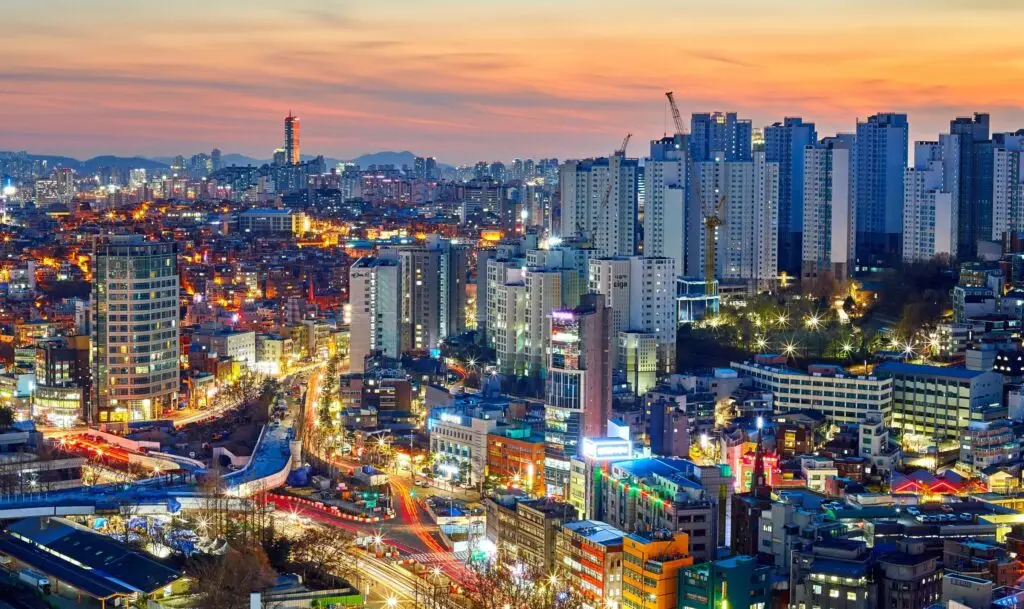
Seoul is enormous and mostly new, because most of it was rebuilt after 1953. That makes it a city where the old and the very new sit next to each other with almost nothing in between: a fifteenth-century palace gate with a glass tower behind it, a covered market from 1905 under an expressway.
These five places, taken together, explain how the city works. If you only have two days, do these.
1. Gyeongbokgung and the palace quarter
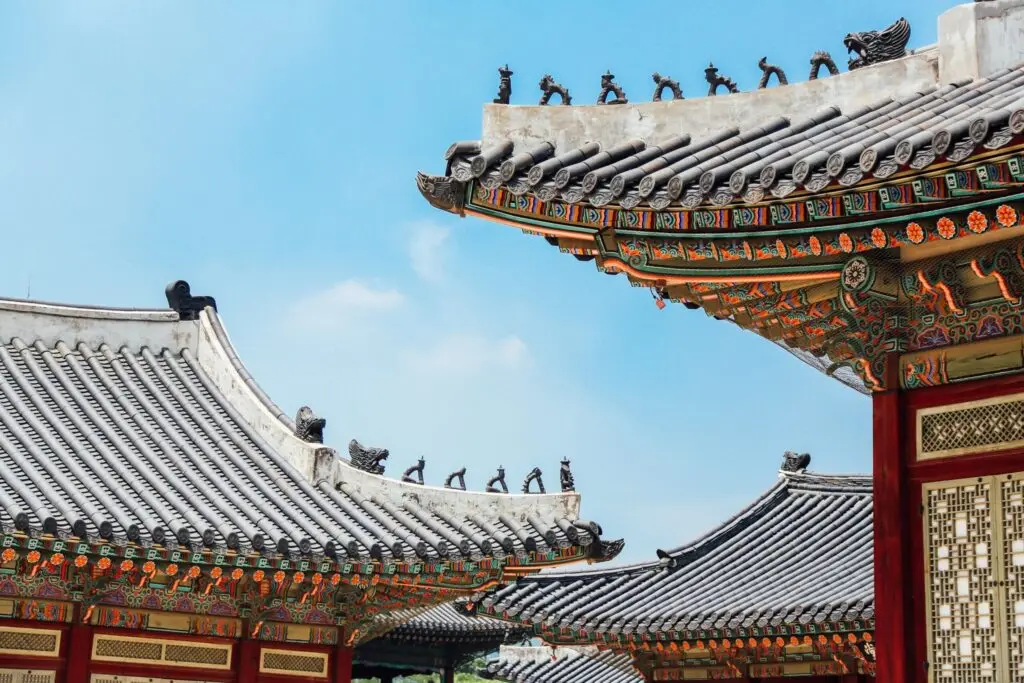
The main royal palace of the Joseon dynasty, built in 1395, burned during the Japanese invasions of the 1590s, rebuilt in the 1860s, and then largely demolished during the colonial period in the twentieth century. What you see is the result of a long restoration that is still going on.
Two practical things. The changing of the guard happens at the main gate several times a day and is worth timing your arrival around. And if you rent a hanbok, the traditional dress, available from shops all around the palace, entry is free. That is why so many visitors are wearing one; it is not a costume requirement, it is a discount.
The National Folk Museum is inside the grounds and included, and Gwanghwamun Square in front is where the city holds its demonstrations, which is its own kind of sightseeing.
2. Bukchon Hanok Village
Between Gyeongbokgung and Changdeokgung, a hillside of hanok, traditional single-storey courtyard houses with curved tiled roofs, that survived the rebuilding. The lanes are steep and the views back over the tiles towards the modern skyline are the reason to come.
An important note: people live here. Bukchon is a residential neighbourhood, not an open-air museum, and residents have had genuine problems with noise and crowds. There are signs asking for quiet, and some lanes have restricted hours. Keep your voice down and do not photograph into windows or doorways.
Just south, Insadong is the traditional crafts street: paper, ceramics, tea houses and calligraphy shops. Touristy, but the tea houses down the side alleys are the real thing.
3. Gwangjang Market
One of the oldest permanent markets in Korea, open since 1905, and the best street food in Seoul. The food aisle is a corridor of stalls with plastic stools, and the things to eat are bindaetteok, the thick mung-bean pancake ground on stone mills you can watch turning; mayak gimbap, small seaweed rice rolls with mustard sauce; and tteokbokki.
You sit at whatever stall you like, order by pointing, and share the counter with everyone else. Lunchtime is the best time; late evening is the most fun.
4. Namsan and N Seoul Tower
The mountain in the middle of the city, with a communications tower on top that has become the standard Seoul landmark. You can take the cable car, a bus, or walk up through Namsan Park in about forty minutes, which is what locals do.
The view is the reason: from up there you can see how Seoul is built between mountains and cut in half by the Han river, which is hard to grasp from street level. Go an hour before sunset and stay for the lights.
Part of the old Seoul City Wall runs over the mountain, and you can walk long sections of it. The full circuit is around eighteen kilometres; the Namsan stretch is a good sample.
5. Cheonggyecheon
A stream running about eleven kilometres through central Seoul, sunk a few metres below street level, with walking paths along both banks.
What makes it worth seeing is what it replaced. The stream was covered over in the 1950s and 60s and an elevated expressway was built above it. In 2003 the city tore the road down, restored the waterway, and reopened it in 2005. It was contentious and expensive, and it changed how cities around the world talk about removing urban motorways.
Walk a section in the evening when it is lit. It is also several degrees cooler than the streets above, which matters in a Seoul summer.
What else, if you have longer
Dongdaemun Design Plaza, Zaha Hadid's enormous curved aluminium building, is best at night. Hongdae is the student and live-music district. Bongeunsa is a working Buddhist temple sitting directly opposite a convention centre in Gangnam, which is a photograph in itself. The Han river parks are where the city goes in the evening, and you can rent bicycles along them. And a jjimjilbang, a public bathhouse and sauna complex, open all night, is the most local thing you can do.
Getting around
The subway is fast, cheap, signposted in English and goes everywhere. Buy a T-money card at any convenience store and use it for the subway, buses and taxis. Google Maps does not do driving directions well in Korea for licensing reasons; use Naver Map or Kakao Map instead, both of which have English interfaces.
Seeing the old centre on foot
Gyeongbokgung, Bukchon, Insadong, Cheonggyecheon and Gwangjang are all within a walkable stretch of each other, and that stretch is the historic core. A city game gives you a route through it with something to solve at each stop, which is a good way to link places that otherwise feel like separate trips.
Frequently asked questions
How many days do I need in Seoul?
Four is comfortable: one for the palace quarter, one for the markets and Namsan, one for Gangnam and the modern city, one for a day trip such as the DMZ or Suwon.
Is the hanbok rental worth it?
If you want to enter several palaces, it pays for itself in free entry, and Koreans do it too. Shops around Gyeongbokgung rent by the hour.
When should I visit?
Spring for the blossom in April, autumn for the leaves in October and November. Summer is hot, humid and includes a rainy season. Winter is very cold but clear.
Do I need Korean?
Not for the subway, museums or big restaurants. Learning to read hangul takes an afternoon and helps enormously, because the alphabet is phonetic and many words are borrowed.
Is Seoul expensive?
Transport and street food are cheap. Restaurants, cafés and accommodation are mid-range by international standards. The markets are where the value is.
Does Seoul work for a group?
Very well. Korean food is served for sharing, the subway handles groups easily, and the historic core is compact. For organised group activities, see what we run for companies and groups.
Plan the day
A shape that works: Gyeongbokgung at opening for the guard change, Bukchon and Insadong late morning, Gwangjang for lunch, Cheonggyecheon in the afternoon, and Namsan for sunset. If you want the walking to have a route, here is how our games work, and you can get in touch about organising one. Want more on the palaces themselves? Our guide to the five grand palaces of Seoul goes into each one.