Madrid has two kinds of market. There are the food halls that neighbourhoods actually shop in, still full of fishmongers and butchers at nine in the morning, and there are the restored iron halls aimed squarely at visitors. Both are worth your time as long as you know which is which before you order.
In short: El Rastro for Sunday morning, Maravillas and Antón Martín for real food, San Fernando for the evening, and San Miguel only to look. Check opening times on the official sites before you go (sources at the end).
When is El Rastro, Madrid's flea market?
Sunday and public holiday mornings, in La Latina.
Madrid's flea market has been running in La Latina since at least the sixteenth century and takes over the streets around Ribera de Curtidores every Sunday and public holiday morning. It sells everything: secondhand clothes, old postcards, tools, furniture, records, and a great deal of new merchandise pretending to be otherwise.
The trick is the side streets. The main drag is dense with crowds and mass-produced goods; the little squares off it, particularly around Plaza del General Vara del Rey, are where the actual antiques and the serious dealers are. Go before eleven, keep your bag in front of you, and finish with a vermouth in La Latina like everyone else does. That part is not optional.
Is the Mercado de San Miguel worth it?
For the building and one bite, yes; for a meal, no.
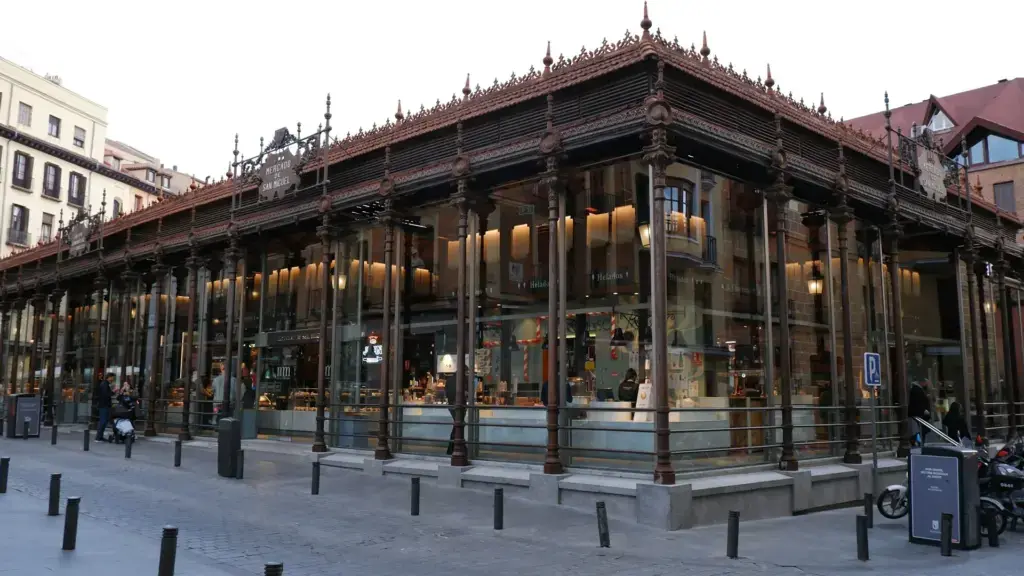
The glass-and-iron hall beside Plaza Mayor dates from 1916 and is genuinely lovely to look at. Since its restoration it has been a gourmet tapas market rather than a food market: dozens of small counters selling one croqueta or one oyster at a time, at prices that make Madrileños raise an eyebrow.
Go, look at the building, have one thing, and move on. Treating it as your dinner is how you spend a lot of money standing up.
Where does Madrid actually shop for food?
At the Mercado de Maravillas in Cuatro Caminos.
Up in Cuatro Caminos, well away from the centre, this is one of the largest food markets in Europe by number of stalls, and it is a working one. Whole aisles of fish, meat, fruit, cheese and preserves, priced for people cooking dinner rather than for people taking photographs.
Several stalls have small bars where you can eat what they sell. That is the best-value lunch in Madrid and almost no visitor finds it.
What is the Mercado de Antón Martín like?
Half traditional market, half international food counters.
In Lavapiés, Antón Martín is half traditional market and half something else: greengrocers and fishmongers next to a Japanese counter, a Peruvian kitchen and a Venezuelan bakery, reflecting the neighbourhood around it.
It is the most Madrid of the five: nothing restored for tourists, everything slowly changing anyway.
Why go to the Mercado de San Fernando?
For a neighbourhood market with an evening crowd and low prices.
Also in Lavapiés, San Fernando is what happened when a dying municipal market was taken over by young traders: a secondhand bookshop charging by weight, a craft beer bar, a cheesemonger, an Ecuadorian stall, all alongside the original butchers. It works because the neighbourhood kept using it.
Evenings are when it fills up, and the prices are a fraction of San Miguel's.
Is there a monthly market in Madrid?
The Mercado de Motores takes over the old railway museum for one weekend a month: vintage clothing, design, records and food trucks among the steam locomotives. Check the dates before planning around it, and note that Christmas brings a separate market to Plaza Mayor that is mostly nativity figures and joke wigs.
How do you eat in a Madrid market?
In the working markets, you order at a counter, stand up, and pay at that counter: each stall is a separate business. A caña is a small beer and the correct thing to order with anything fried. Vermouth on tap, poured over ice with an olive and a slice of orange, is the Sunday drink and is taken seriously. Most food stalls close by mid-afternoon; the bar sections stay open later.
How can you explore Madrid between markets?
The markets are spread across neighbourhoods, and the walking between them is half the point. A city game turns that walking into something more deliberate: you explore in small teams with your phone, solve puzzles tied to real streets and squares, and end up in parts of Madrid you would not have picked. No guide, no fixed start time, and you stop to eat whenever you like.
It works for friends, families and company outings and larger groups. The how it works page explains it step by step.
Frequently asked questions
When is El Rastro open?
Sunday and public holiday mornings, roughly from nine until three. It does not run on other days.
Is Mercado de San Miguel worth visiting?
Worth seeing, not worth a full meal. The building is beautiful and the prices are the highest of any market in the city.
Which market is best for real food shopping?
Maravillas in Cuatro Caminos, followed by Antón Martín. Both are working markets with proper specialist stalls.
Do the markets take cards?
Nearly all do now, though a few older stalls prefer cash. Carrying a small amount avoids a problem.
What time do markets close?
Traditional food stalls typically close in the early afternoon and many do not open Sunday. Bars and tapas counters inside stay open into the evening.
Is El Rastro safe?
It is safe but very crowded, which makes it good territory for pickpockets. Keep your bag closed and in front of you.
In short: go on a Sunday
El Rastro in the morning, vermouth at noon, and a market lunch is close to a perfect Madrid day. See all the cities where we run games, read about the coast in Quests in Barcelona, or get in touch if you are planning something for a group.
Sources
Markets, opening days and the Rastro: esMadrid, the city of Madrid's official tourism site. Opening hours change, so check there before you go.