
The Obligatory Stops in Gijón
7. november 2022
Gijón is the biggest city in Asturias and the one that gets skipped by people heading for the mountains. That is a mistake. It has a beach in the middle of town, an old fishing quarter on a headland, one of the best-known sculptures in Spain sitting on a clifftop, and a drinking culture that involves pouring cider from above your head. It is also green, cool in summer and unpretentious in a way the Mediterranean coast has largely given up on.
Here are the stops that matter, in an order that works.
Cimadevilla and the headland
The old quarter
Cimadevilla is the original fishing village, packed onto the headland that separates the city's two beaches. Narrow streets, painted houses, a square full of terraces, and the highest concentration of sidrerías in the city. It is where you eat and where you end up at night.
Elogio del Horizonte
On the hill above Cimadevilla, on the Cerro de Santa Catalina, stands Eduardo Chillida's enormous concrete sculpture from 1990. Praise of the Horizon: a heavy curved form framing the sea and nothing else. Stand underneath it in the centre and the shape gathers the sound of the wind and the waves into something you can hear all around you. Chillida said it was the best piece he ever made. Locals call it the toilet, affectionately.
The Roman baths
Underneath the church of San Pedro at the edge of Cimadevilla are the excavated remains of a Roman bath complex from the first century. Gijón was a Roman settlement long before it was a fishing town, and the site is small, well presented and takes half an hour.
The beach and the promenade
Playa de San Lorenzo runs for well over a kilometre along the eastern side of the city, with a raised promenade — the Muro — above it. This is where Gijón walks. In the morning it is runners and dog walkers, in the evening it is everyone else. At low tide the beach doubles in width and people play football on it.
On the other side of the headland, Playa de Poniente is calmer and more sheltered, next to the marina.
Cider, and how to drink it
Asturian cider is still, dry, cloudy and low in alcohol, and it is poured — escanciado — by holding the bottle above your head and the glass down at your hip, so the stream breaks against the side of the glass and aerates. You get a culín, a shallow inch or two, and you drink it in one go while it still has life in it. The last drop goes on the floor to rinse the glass. This is why sidrería floors are wet, and sawdust exists.
The bottle is shared. One glass goes round the table, refilled for each person in turn. Asturian cider culture is recognised by UNESCO as intangible cultural heritage, which surprises nobody who has spent an evening in one of these places.
Calle Begoña and Cimadevilla have the highest concentration of sidrerías. If a waiter offers to pour for you, let them; the machines that pour automatically are convenient and slightly beside the point.
The Cider Tree
Near the western beach stands a sculpture built entirely out of green cider bottles, thousands of them, stacked into a tree. It is exactly as odd as it sounds and it is a good photograph.
What to eat
Fabada asturiana, the white bean and pork stew, which is heavy enough to end your afternoon. Cachopo, two veal fillets with ham and cheese between them, breaded and fried, usually sold for two people and rarely finished by two people. Cabrales, the blue cheese matured in mountain caves, which is aggressive and excellent. Arroz con leche with a burnt sugar crust. And whatever the boats brought in, because this is still a fishing port.
Beyond the centre
Universidad Laboral
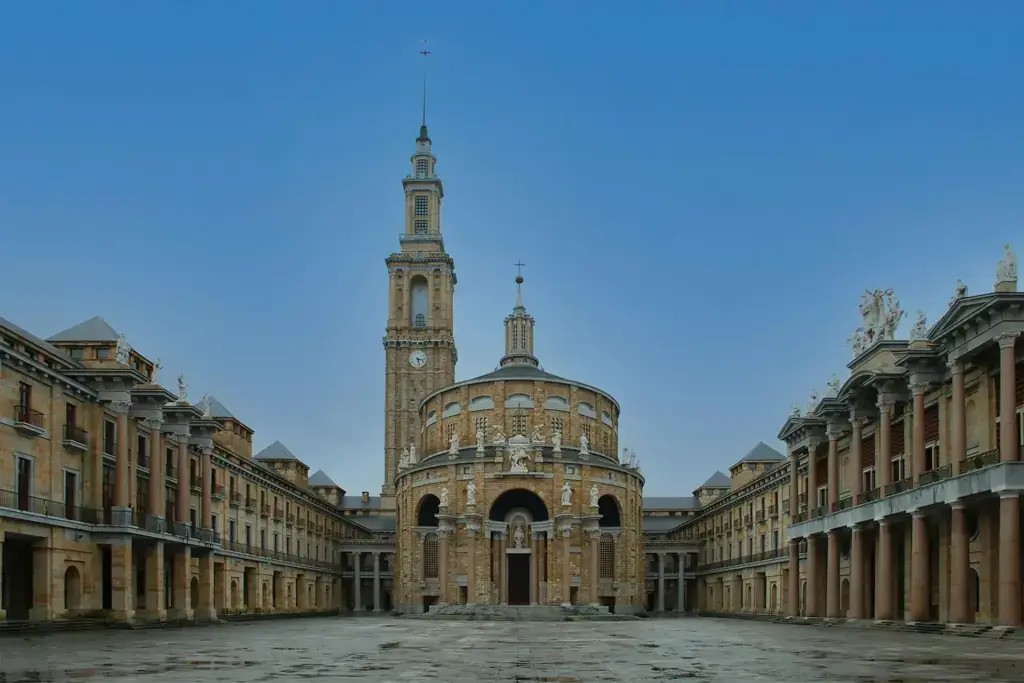
A vast complex on the eastern edge of the city, built in the 1940s and 50s as a technical school and now a cultural centre. It is one of the largest buildings in Spain by floor area, with a tower you can go up for a view over the whole coast. The scale of it is genuinely strange, and it is worth the bus ride.
The Atlantic Botanical Garden
Next door, with a section of preserved Atlantic woodland — the kind of forest that covered this coast before it was cleared. Good on a grey day, which Gijón supplies regularly.
Jovellanos' house
Gaspar Melchor de Jovellanos, the Enlightenment writer and reformer, was born here, and his family house in Cimadevilla is now a museum. Small, free and a useful twenty minutes of context for the whole region.
Walking the city
Gijón is compact and the good parts are close together: the headland, the beach and the old town sit within twenty minutes of each other on foot. A city game gives you a route through them with something to solve at each stop, which suits a city where the pleasure is in the walking rather than in ticking off monuments.
Frequently asked questions
How long do I need in Gijón?
A full day covers Cimadevilla, the Chillida, the beach and an evening of cider. Two days lets you add the Laboral, the botanical garden and a trip along the coast to Cabo de Peñas.
When should I visit?
June to September for the beach and the long evenings. The rest of the year is mild, green and wet — Asturias is not called green Spain for nothing. August is the busiest month, when the rest of Spain arrives to escape the heat.
Do I have to pour the cider myself?
No, and you probably should not on your first night. Ask the waiter. If you do try, hold the bottle high, aim for the inside edge of the glass, and accept that you will spill it. Everyone does.
Is Gijón good for families?
Very. The beach is in the city, the aquarium is on the waterfront, the promenade is flat and long, and portions are generous enough to share.
Can I get to Oviedo easily?
Yes, half an hour by train or bus, and the two cities are completely different in character. Many people base themselves in Gijón for the coast and day-trip inland.
Is this a good place for a group trip?
It is: cider houses are built around sharing, the centre is walkable and it is cheaper than the big-name Spanish cities. For organised group activities, see what we run for companies and groups.
Plan the day
The shape that works: Cimadevilla and the Roman baths in the morning, up to the Chillida before lunch, the Muro and the beach in the afternoon, cider in the evening. If you want the morning to have a route, here is how our games work, and you can contact us about organising one. Continuing west along the coast? Our guide to the important places in Vigo covers the other end of green Spain.