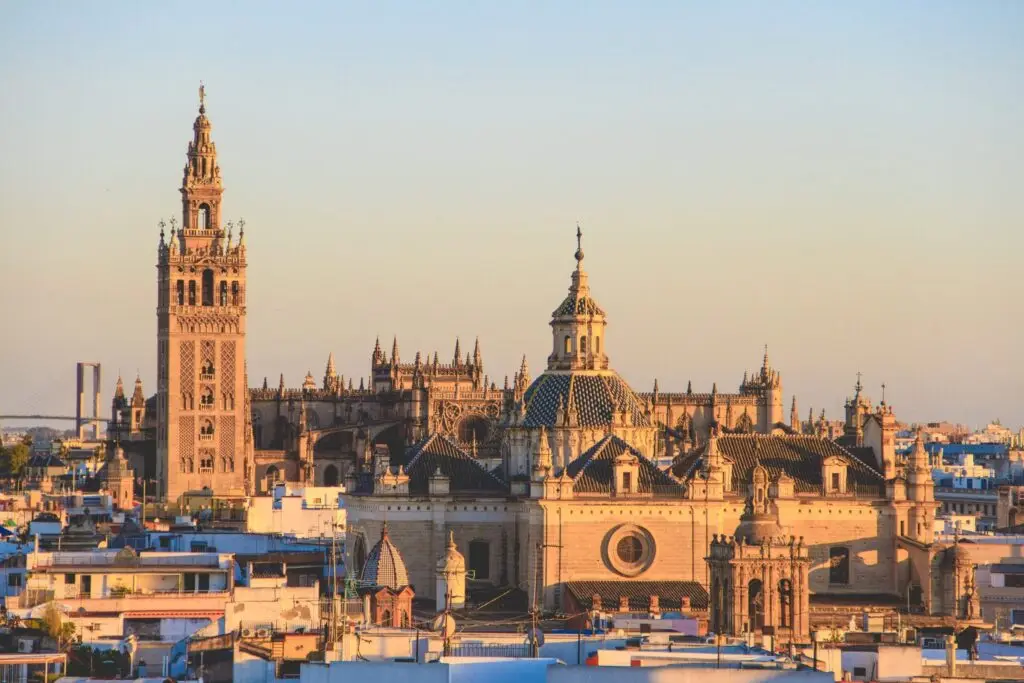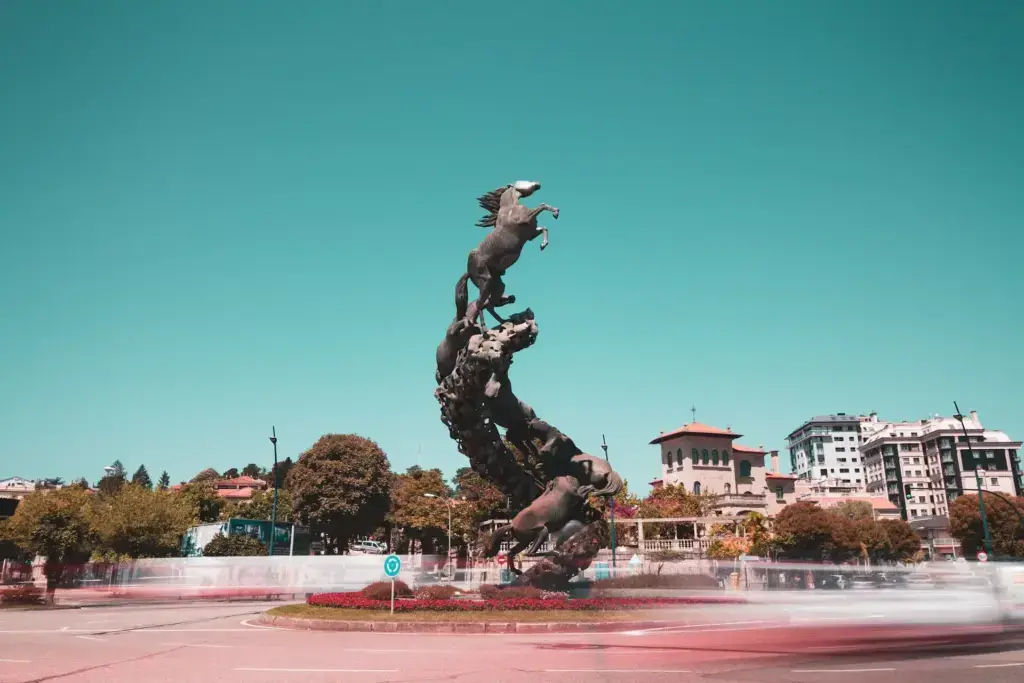
Valencia gets described as Spain's third city, which undersells it. It has its own language, its own rice dish that the rest of the world has comprehensively misunderstood, a festival that burns millions of euros of sculpture every March, and a park where a river used to be. It is also flat, walkable and considerably cheaper than Barcelona.
Here are the things Valencia is genuinely known for, and what you need to know to get each one right.
Paella, and what it actually is
Paella is Valencian. Not Spanish generally, Valencian specifically, and the traditional recipe is narrower than most visitors expect. Paella valenciana contains rice, chicken, rabbit, flat green beans, garrofó (a large white bean), tomato, olive oil, saffron and water. Snails and a sprig of rosemary appear in many versions. It does not contain chorizo, and it does not contain seafood, that is a different dish, arroz a banda or paella de marisco, and it is also excellent, but it is not the same thing.
Two rules that matter more than the ingredients. First, paella is a lunch dish, cooked to order and eaten in the early afternoon. A restaurant offering paella at 9pm is cooking for tourists. Second, it takes time: expect to wait 30 to 45 minutes after ordering, and be suspicious of anywhere it arrives faster.
The dish comes from the rice fields around the Albufera lagoon south of the city. The village of El Palmar, out in the paddies, is where locals go on a Sunday, and a bus or a short drive gets you there.
Las Fallas
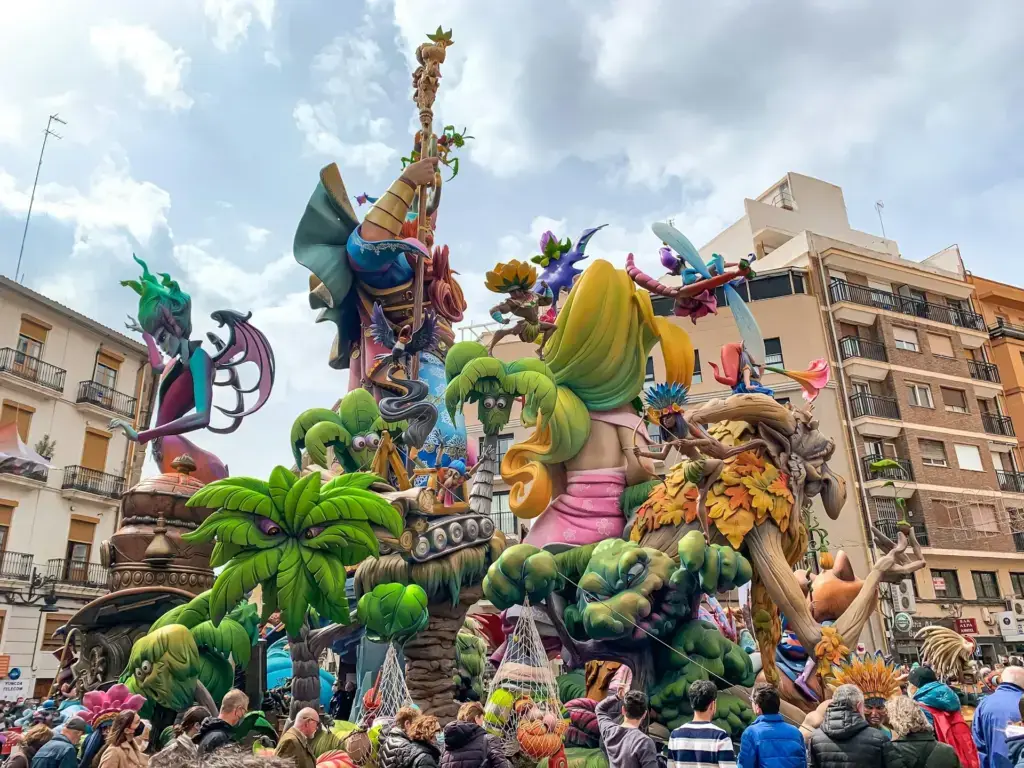
Every March the city fills with enormous satirical sculptures, called fallas, built by neighbourhood associations over the course of a year, and then burns almost all of them on the night of the 19th. The festival is inscribed on UNESCO's list of intangible cultural heritage.
The rhythm of it: through the first half of March there is a mascletà every day at 2pm in the Plaza del Ayuntamiento, which is not fireworks for the eyes but a percussive sequence of explosions you feel in your chest. The sculptures go up around the 15th. On the 19th, la cremà, they burn, starting with the children's fallas and ending with the main one in the square, usually after midnight.
One ninot, a single figure from any falla, is pardoned each year by public vote and goes into a museum instead of the fire. Everything else is ash by morning.
If you come during Fallas, accept that the city is loud from breakfast onwards, that firecrackers are legal and everywhere, and that hotels cost several times what they normally do. It is worth it once.
Horchata and fartons
Valencian horchata (orxata de xufa) is not the Mexican rice drink of the same name. It is made from tiger nuts, small tubers grown in the fields around Alboraya just north of the city, blended with water and sugar and served very cold. It is thick, sweet and vaguely nutty.
You drink it with fartons, long soft glazed buns made for dipping. The classic move is an afternoon horchata in the heat, either at a horchatería in the old centre or, better, out in Alboraya where the crop grows.
A river turned into a park
After a catastrophic flood in 1957 the Turia river was diverted around the city instead of through it. Rather than build a motorway in the empty riverbed, which was the original plan, Valencia turned it into a nine-kilometre park that curves right through the middle of town.
It is the best thing about the city day to day. You can walk or cycle from the old centre to the sea almost entirely inside it, passing under the old stone bridges, and it ends at the City of Arts and Sciences, the white complex designed largely by Santiago Calatrava that appears on every photograph of modern Valencia.
The old city
La Lonja de la Seda
The 15th-century silk exchange, a UNESCO World Heritage site, and one of the finest civil Gothic buildings in Europe. The main hall has spiralling stone columns that fan into the ceiling like palm trees. It takes twenty minutes to see and it is the single most impressive interior in the city.
Mercado Central
Directly opposite, a vast iron-and-glass modernist market from 1928, still a working food market rather than a food court. Go in the morning.
The Water Tribunal
Every Thursday at noon, at the Apostles' Door of the cathedral, eight elected farmers sit in a circle and settle disputes about irrigation water in the surrounding fields. They do it out loud, in Valencian, without written records, and the rulings are binding. It has been running for centuries and is also UNESCO-listed. It usually lasts a few minutes and is free to watch.
El Carmen and Ruzafa
El Carmen is the medieval quarter: narrow, painted with street art, busy at night. Ruzafa, south of the station, is where the city's newer bars and restaurants have clustered. Both are best walked without a plan.
Agua de Valencia
Orange juice, cava, gin and vodka, served by the jug. It tastes like fruit juice and it is not fruit juice, which is the entire problem with it. Have one jug between several people, in the evening, and treat the second with respect.
Walking the city
Valencia is flat, compact and shaded in the right places, which makes it one of the better Spanish cities to explore on foot. A city game gives you a route through the old centre with something to solve at each stop, which is a good way to cover the Lonja, the market, the cathedral and El Carmen without standing in front of a map arguing about direction.
Frequently asked questions
Is La Tomatina in Valencia?
No. It takes place in Buñol, a town roughly 40 kilometres inland, on the last Wednesday of August. It is easy to reach from Valencia by train or bus, but it is not a Valencia city event.
When is the best time to visit?
Spring and autumn. March if you want Fallas and can handle the noise and the prices. July and August are hot and humid, though the beach makes that manageable.
Do people speak Valencian?
Yes, widely, alongside Spanish. Street signs and official names are often in Valencian. Everyone will switch to Spanish, and in the centre English is common enough.
Where should I actually eat paella?
Away from the main tourist squares, at lunchtime, somewhere that lists paella valenciana with its real ingredients and gives a cooking time. El Palmar and the Albufera villages are worth the trip if you have a free afternoon.
Is Valencia good for a group trip?
Very. It is cheap by Spanish city standards, everything is walkable or reachable by bike, and the beach and the old town are twenty minutes apart. For organised group activities, see what we run for companies and groups.
How many days do I need?
Three is comfortable: one for the old centre, one for the park and the City of Arts and Sciences, one for the beach and the Albufera.
Plan your day in Valencia
The city rewards a slow morning in the old centre, a long lunch, and an afternoon in the riverbed park heading towards the sea. If you want the morning to have a shape, here is how our games work, and you can get in touch about running one for your group. Heading south afterwards? Our guide to flamenco in Granada covers a very different Spanish evening.