

Sherlock Holmes · Murder mystery
Tokyo Self-Guided Detective Murder Mystery Game
1.5–2 hours · 1–4 players per team · free Loquiz app€19.95 per team
 Group games: teams against each other
Race Through Tokyo
Expected soon in Tokyo
A city game where teams play against each other: at least 2 teams of 1–4 players, each team on its own phone.

Walk through the real city. The map shows every zone:  free,
 taken by a team in its colour, or
 locked for a few minutes. The game starts at
 .
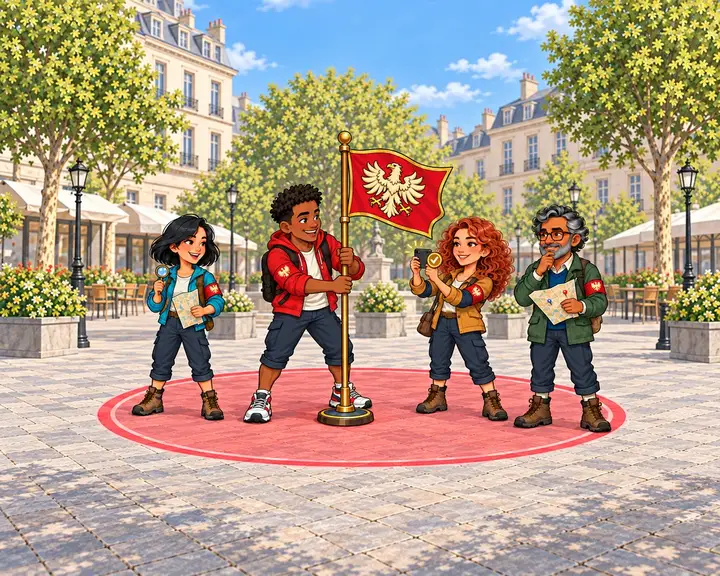
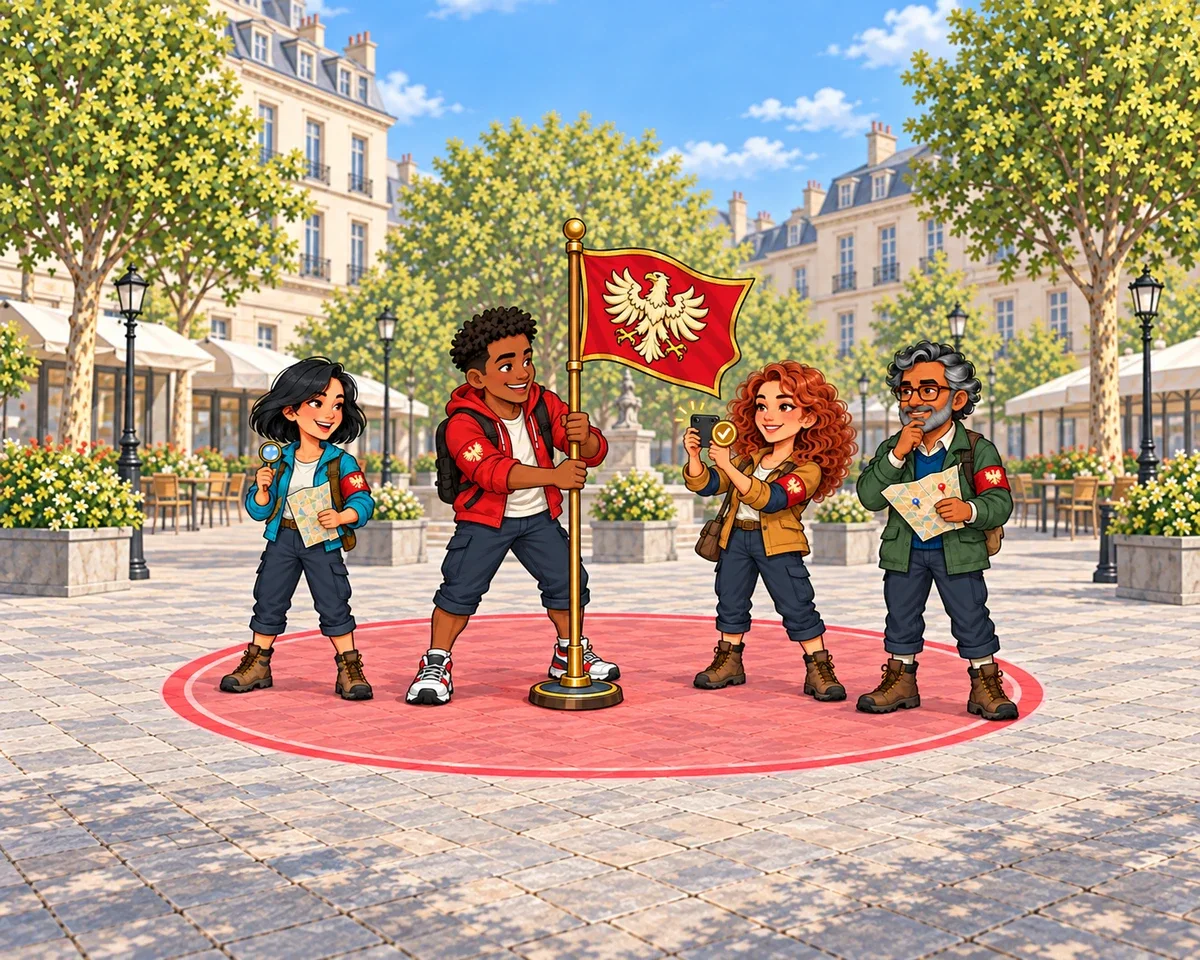
Step into a zone, open its task and send your proof: an answer, a photo or a video. Get it right and the zone takes your colour , and you earn 30 ducats  .
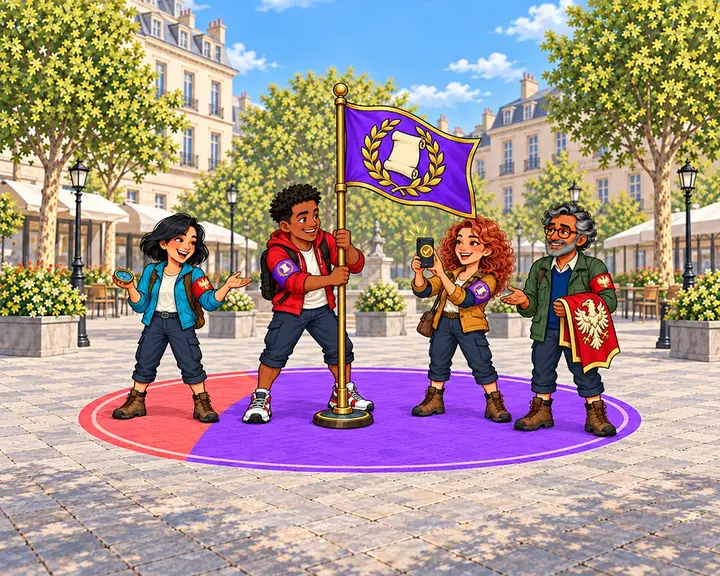
Other teams can take your zones once the lock is over, and you can take theirs. A zone  stays with the team that conquers it. The first team at a bonus spot
 gets a power-up in its backpack
 .
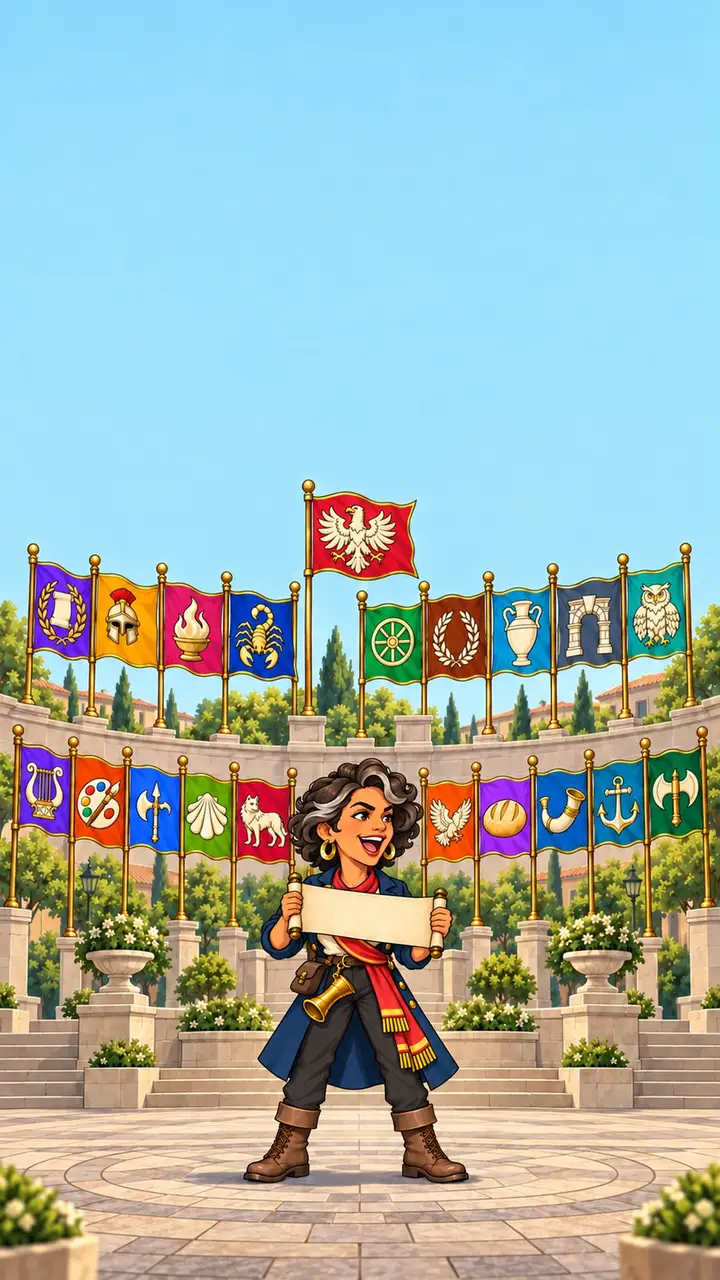
When the time is up, the team with the most points wins; with equal points, the most ducats . Be at the meeting point  in time: the herald calls everyone together.
Every zone has a set of tasks about what you can really find there. Each team gets a different one, and a new one every time it comes back, so answers can't be passed on.
Each team picks a faction: a group with its own story, strengths and characters.
“The sword is the soul”
The warrior class of the Edo shoguns. In Edo they lived in the big estates round the castle and walked the streets with two swords.


“Unseen, unheard”
The shadow agents of the shoguns' Japan: scouts and spies who climbed walls and carried messages no one could read.
“Never step out of the ring”
Sumo has been fought in Tokyo's Ryōgoku, just down the Sumida from Asakusa, since the Edo period. A champion is a star and a gentle giant.
“Every art in one evening”
Asakusa still has a working geisha house behind the temple. Geisha are artists: dance, the shamisen, songs and conversation.
“The show must go on”
Kabuki was born in Edo's theatre streets; from 1841 the big theatres stood just north of Sensō-ji. The great actor Danjūrō IX has his statue here.
“Edo to Kyoto in three days”
The express runners of the Edo period carried letters and money on foot along the great roads, in relays, day and night.
“Fire is the flower of Edo”
Edo burned so often that its people said 'fire and fights are the flowers of Edo'. The hikeshi firefighters were the city's heroes, each brigade with its own standard (matoi).
“Hold on, we're off”
The jinrikisha was invented in Tokyo around 1869. Today Asakusa's pullers in short coats and split-toe boots run tourists round the temple and tell its stories.
“Patience opens every gate”
Sensō-ji is Tokyo's oldest temple, founded in 628. Its monks keep the hidden statue of Kannon and ring the bell at dawn.
“Clap twice, bow once”
The miko of Asakusa Shrine dance the sacred kagura and sell the charms. Their shrine has stood since 1649.
“Pictures of the floating world”
Edo's woodblock artists printed the city's pleasures: actors, the river, festivals, Mount Fuji. Hokusai was born in Honjo, on the other bank of the Sumida.
“A fan, a towel and a story”
Rakugo is a one-person comic story told kneeling on a cushion with only a fan and a towel. Asakusa's Engei Hall has shows every day of the year.
“Every guest is a god”
The shops of Nakamise have sold sweets, fans and toys to pilgrims for some 300 years. Their saying: 'the customer is a god'.
“Measure twice, cut once”
Japan's temple carpenters (miyadaiku) join huge wooden beams without nails. The pagoda's swaying central pillar taught even the builders of the Skytree.
“The river gives”
In 628 two fishermen brothers pulled a small statue of Kannon from the Sumida in their net; that is how Sensō-ji began.
“Edo is ours”
From 1603 the Tokugawa shoguns ruled Japan from Edo, today's Tokyo. Shogun Iemitsu had Asakusa Shrine built in 1649.
“Fast hands, fresh fish”
Hand-pressed sushi was Edo's fast food, sold from street stalls. Asakusa's Sushiya-dōri still carries the name.
“Learn from the Dutch”
During Japan's closed centuries, 'Dutch learning' (rangaku) brought Western science through the Dutch post at Nagasaki: medicine, maps, astronomy.
“Wasshoi! Wasshoi!”
At the Sanja Matsuri every May, hundreds of locals carry the portable shrines through Asakusa, shouting and bouncing them on their shoulders.
“Now you see us...”
Foxes are the messengers of Inari; in old stories they play tricks on travellers. Asakusa Shrine's grounds hold a small Inari shrine.

Every 20 minutes the herald hides chests  in the streets. The first team within 30 m opens one: ducats , a potion, a defence or something to leave for others.

You start with 50 ducats and earn more by conquering, holding zones and approved photos. Spend them at the merchant  : you can buy anywhere, and at his spot you get 20% off.

Leave a bomb, trap, fog, curse or sabotage on the street  . Only your team sees it; the team that walks into it is hit. Fog
 hides their map beyond 100 m. A scout
 shows drops near you
 : walk to one to defuse it.
 Speed potionWait times and zone locks halved for 10 minutes.
 Wisdom potionRemoves one wrong answer from your next multiple-choice question.
 Strength potionYour next conquest scores double.
 ShieldBlocks the next attack on your team (20 seconds to react).
 MirrorSends the next attack straight back to the team that left it.
 AntidoteEnds fog, a trap or a curse at once.
 ScoutShows other teams' drops within 100 m for 2 minutes; walk to one to defuse it.BombLeave it on the street: the team that walks into it loses 25 points.
 TrapLeave it on the street: 3 minutes no conquering and no answering.
 FogLeave it on the street: for 4 minutes their map shows only 100 m around them.
 CurseLeave it on the street: on their next 2 questions a wrong answer costs double.
 SabotageLeave it on the street: steals one thing from their backpack (or 30 ducats).
You play on your own. The organiser opens the game master page, chooses the default language and the playing time, and starts the game. From then on everything runs by itself on every phone: the zones, the chests, the merchant and the final count.
Often chosen by companiesSomeone leads the game from the game master page: follows every team live with its points and zones, sends messages to all teams, adds 15 minutes or stops the game, gives a team a power-up or puts a chest right next to it, and looks at the photos and videos. The game master never sees the answers.
€199.00 including 5 teams, €19.95 per extra team
The organiser sets up the game on the game master page (the default language and the playing time) and starts it for all teams.
Every player can pick and switch the language on their own phone.
City Conquest is on its way to Tokyo. Want to play it with your group as one of the first? Ask us and we will let you know as soon as it is ready.